Bob Haircuts for Women: Every Type and Length
TL;DR
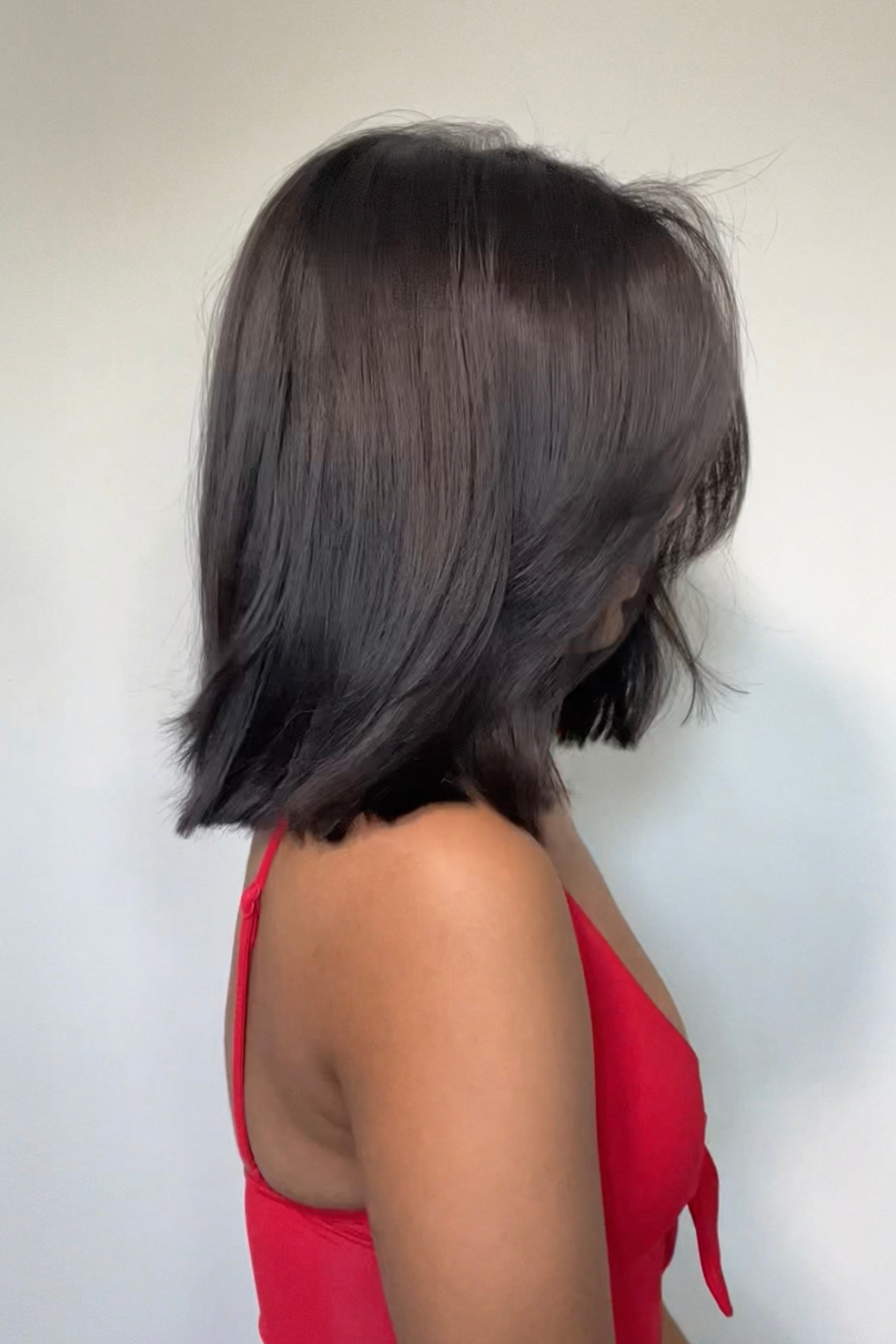
A bob is any haircut that finishes between your ear and your collarbone, and every name you've saved, the blunt bob, the French bob, the Italian bob, the long bob, is mostly that same haircut with the weight moved somewhere else.
So the question worth asking is which one your hair can hold, and whether you want what it costs.
A bob is more work than long hair, and most people are surprised by that.
The grow-out has a shape to it too.
It turns awkward around month two, the worst of it runs from month two to month four, and you're clear after six.
Pick by how much hair you have and how long you'll spend on it in the morning.
Your face shape comes last, and the free Haircut Guide is where you match yours to a cut.
You've got the pictures saved. A dozen of them, all slightly different, and you can't figure out why the same haircut looks sharp on one woman and heavy on another. So you keep scrolling instead of booking.
I've been cutting hair for over ten years, and bob haircuts for women come up in my chair more than any other request. I talk people into them and out of them, often in the same consultation. The ones who still love it a year later aren't the ones who picked the best photo. They're the ones who knew what they were signing up for.
Because the part nobody posts about is the grow-out. There's a name for it now: bob regret, and it's rarely the haircut that caused it. It's that nobody told you what month four would look like.
So this guide runs the other way around. What a bob costs you first, which one suits your hair second.
What Actually Makes a Bob a Bob (and Where the Lob Begins)
A bob is a haircut that ends somewhere between your ear and your collarbone, built around one strong length line. What makes one bob different from the next comes down to two things: where that length falls, and where the weight sits inside the cut. Once it passes your collarbone, it stops being a bob and becomes a lob, which is short for long bob.
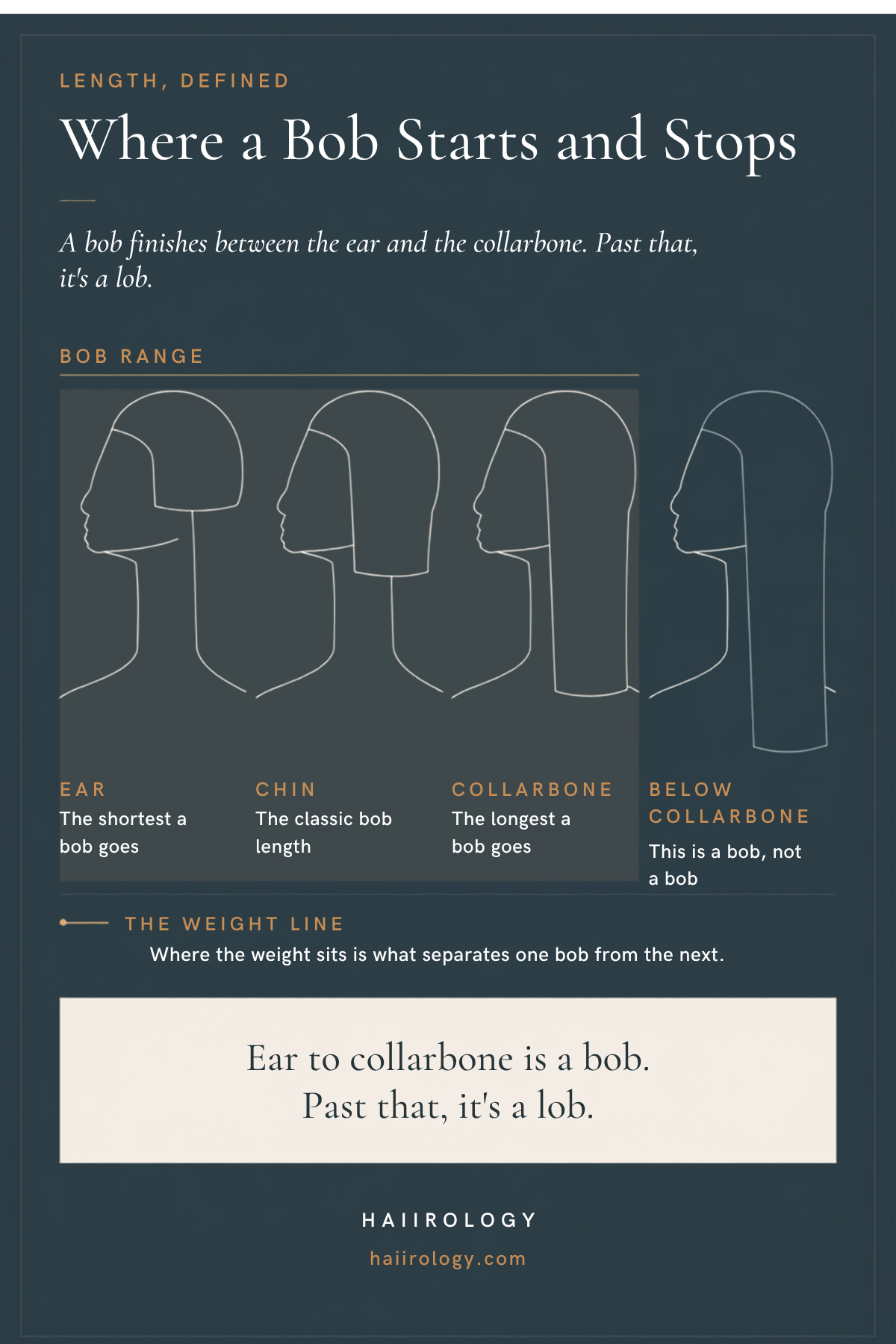
The word you'll hear me use in the chair is the perimeter. Your perimeter is the outline of the cut, the line you see when your hair is brushed smooth. A blunt bob has a hard perimeter, while a layered bob keeps that same outline and takes weight out above it.
Then there's the weight line, which is where your hair feels heaviest as it hangs. Most people can see it but can't name it. If your hair looks wide at the bottom and flat at the top, your weight line is sitting too low for your density.
That's fixable with texturizing shears, which are scissors with teeth that remove bulk without shortening the length. I use them when the ends come out heavy and bulky, to soften that weight line at the bottom, so the outline stays sharp without the ends turning into one solid block. That one adjustment is the difference between a bob that looks structured and a bob that looks like a helmet.
7 Bob Haircuts for Women Worth Knowing
There are about seven bobs anyone actually asks me for, and they differ on those same two variables. Where the length falls, and where the weight sits. Once you can see those two things in a photo, the names stop being a vocabulary test and start being useful.
When someone brings me a viral haircut, I usually tell them most of what's trending is a classic coming back around. Trends rotate. We had the moment where everyone wanted the shortest bob possible, and then everyone wanted length and layers again, and it'll swing back. So pick the shape that works on your hair first, and worry about what's trending second.
The Blunt Bob
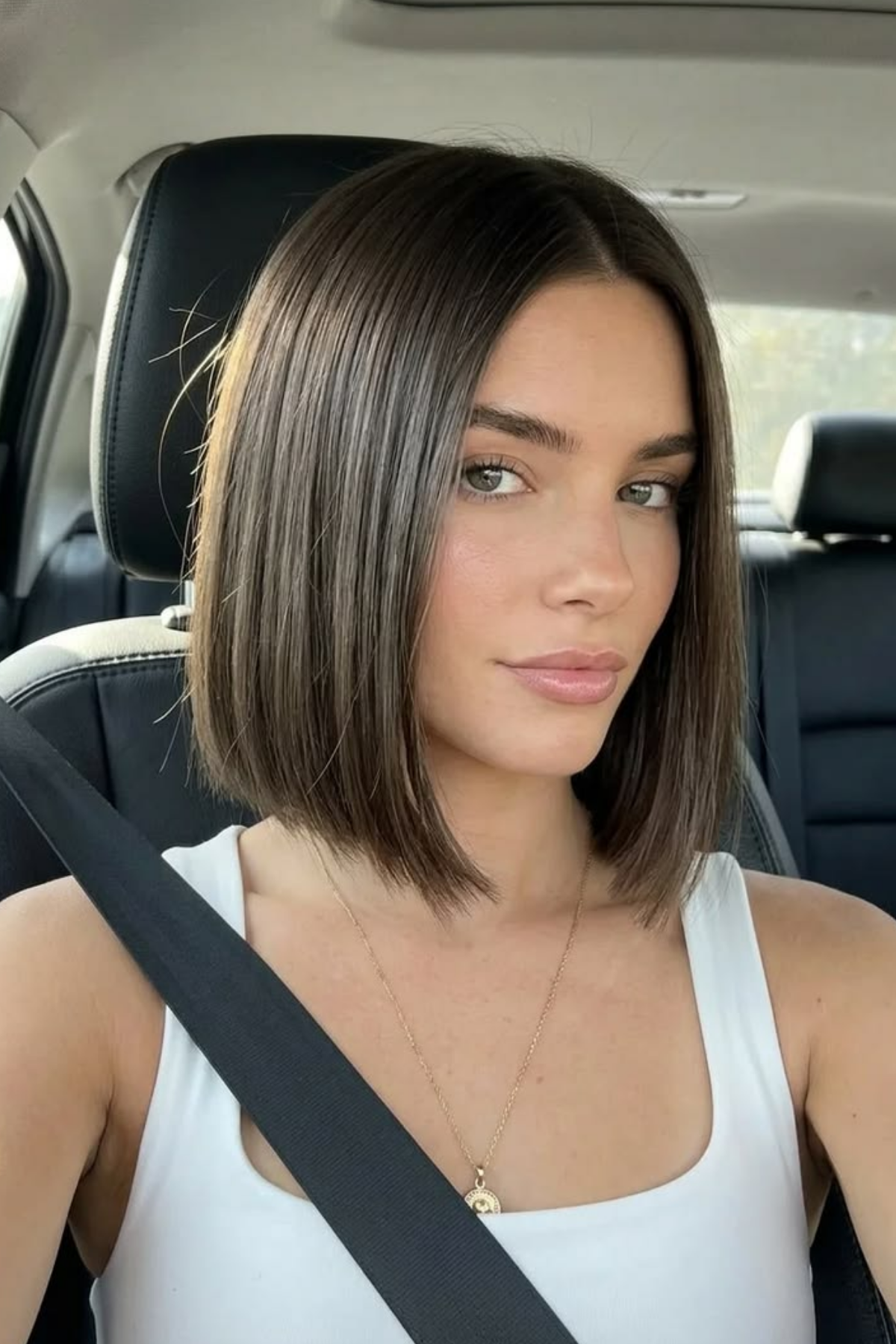
The blunt bob is one length the whole way round. Every strand ends on the same line, so the bottom edge reads as a hard edge instead of a soft one. No layers, no graduation, and all the weight kept down at the bottom.
Anna Wintour has worn the blunt bob since the seventies, and it's the clearest example you'll find of what one line does. It hangs like a curtain and swings as one piece when you turn your head. That weight is the whole trick, and it's why a blunt bob reads as more hair than you have. It's also the first cut to show a grow-out, because that one line is the entire design.
Source: Pinterest
Who It Suits Best
Fine to medium density, straight through to a soft wave, cut between the chin and the jaw. It carries a solid or single-tone color well, because one clean edge gives the shine somewhere to land. This is the highest-upkeep shape on the list, since the line is the haircut and a dropped line looks grown out.
What to Ask Your Stylist
Length: Chin or jaw, and say which one
Layers: None. One length the whole way round
Finish: Blunt, not point cut. Keep the edge hard
Bangs (Optional): A full blunt fringe if you want the Wintour version
Pro Tip
Mist Moroccanoil Perfect Defense through the ends before the dryer goes near them, then dry your ends down, not under. A round brush turning under rounds off the one line you paid for. Point the dryer straight down the length and use your hand or a flat brush to guide it, and the edge stays an edge.
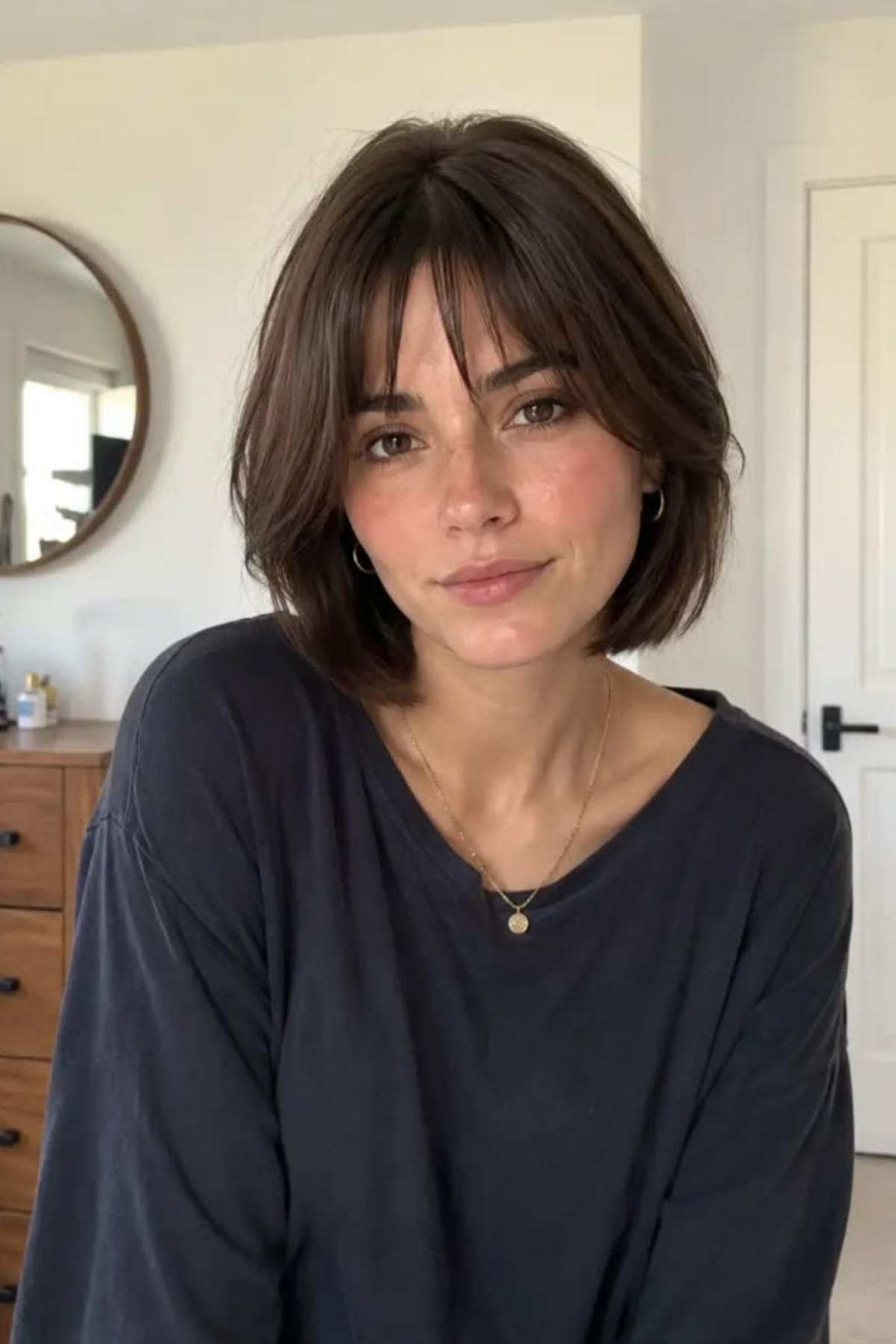
The French Bob
comes with a fringe. The ends are softened rather than cut hard, so the shape looks a bit undone instead of pressed.
Jane Birkin is where the French bob comes from, and the cut is tied to her often enough that "Birkin bob" is now its own term. It's the biggest change on this list. You're losing length and adding a fringe in one appointment, so you walk out looking different rather than trimmed. That's the point of it, and it's also the reason to be sure before you sit down.
Source: Pinterest
Who It Suits Best
Fine to medium density, straight to a gentle wave, cut between the cheekbone and the jaw. Softened ends break up a block of single-tone color, so it's forgiving if your shade is growing out. The body of the cut holds its shape, but the fringe needs its own trims and that catches people out.
What to Ask Your Stylist
Length: Cheekbone or jaw, and say which one
Layers: Minimal. Soften the ends, don't stack them
Finish: Point-cut ends for a lived-in edge
Bangs (Optional): Not optional on this one. Settle the fringe first, blunt or wispy, because it changes how short the rest needs to be
Pro Tip
Wash and dry your fringe on its own. It sits against your skin, so it gets oily a day before the rest of your hair does. Rinse it in the sink, rough dry it with your fingers moving side to side, and you buy another day out of the whole cut. On the days you can't face the sink, a spray of K18 AirWash at the fringe roots does the same job.
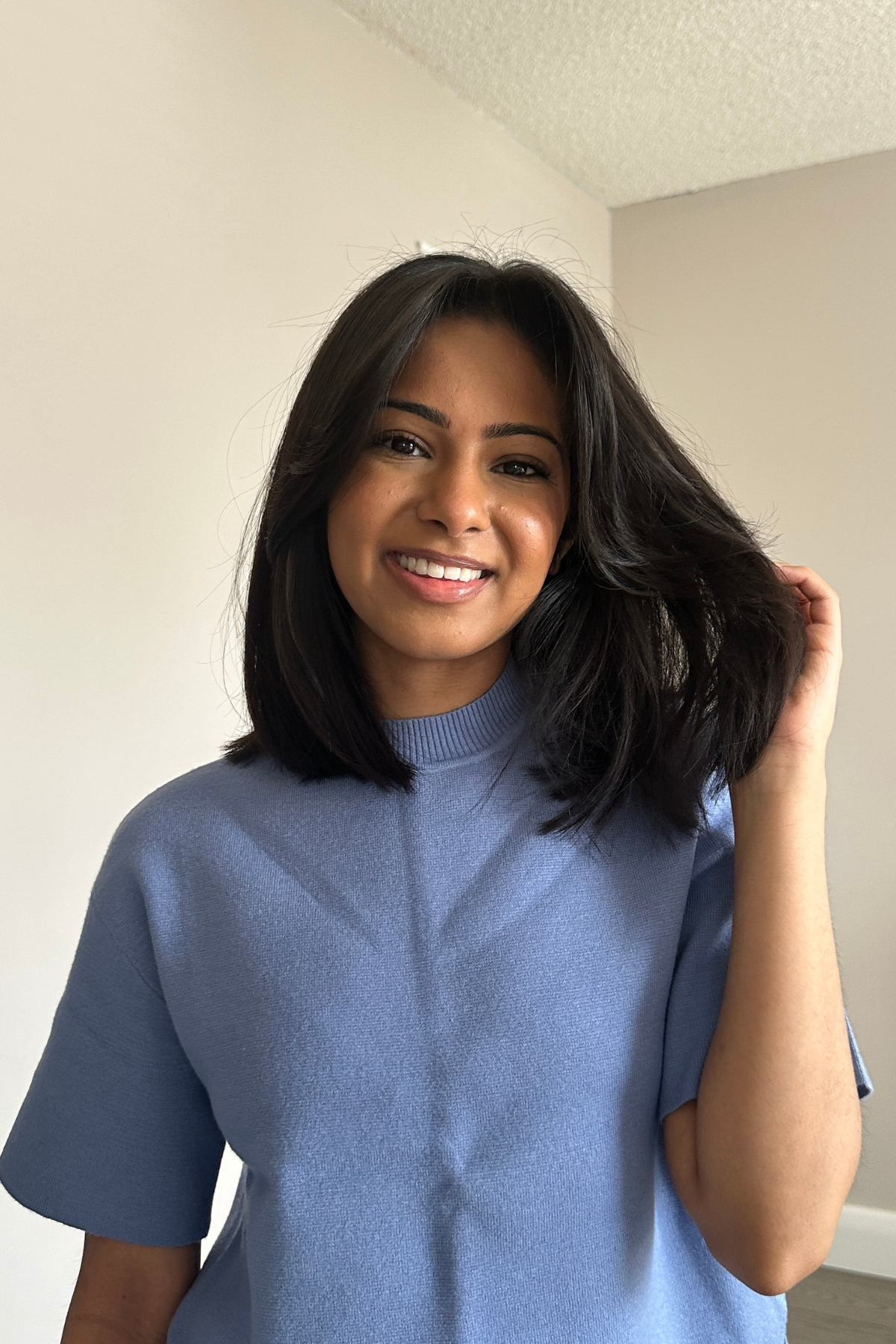
The Long Bob, or Lob, with Layers
The lob finishes at your collarbone or just past it, which makes it the longest cut here. The layers are cut inside the hair rather than off the ends, so the outline stays where it is, and the weight comes out of the middle. That's what gives it movement without costing you the shape.
Taylor Swift's 2014 chop is the one the industry still measures a long bob with layers against, and it's the length that put this cut in front of everyone. This is the cut people pick when they want to go shorter without going short. It still ties back on a bad morning. It still sits on your shoulders, so the change reads as a refresh rather than a chop. It's where I start anyone nervous, because there's room to take it shorter later and no way to put length back.
Source: Personal Image
Who It Suits Best
Medium to thick density, and it handles wave and curl better than any other shape on this list. Cut at the collarbone or just below. Dimensional color sits well in it, because the internal layers let a balayage show through as the hair moves. The most forgiving cut here for upkeep, since the length hides a few weeks of growth.
What to Ask Your Stylist
Length: Collarbone, with a strong perimeter
Layers: Long internal layers, kept blended not stacked
Finish: Point-cut ends for a softer bottom line
Bangs (Optional): Long face-framing pieces if you want them
Pro Tip
Spray K18 AstroLift at the roots while your hair is damp, then dry your parting on the wrong side first. Push the roots flat against the side your hair doesn't fall on, dry them there, then flip the parting back where it belongs. A lob is long enough to go flat on top, and this is the thirty seconds that stops it.
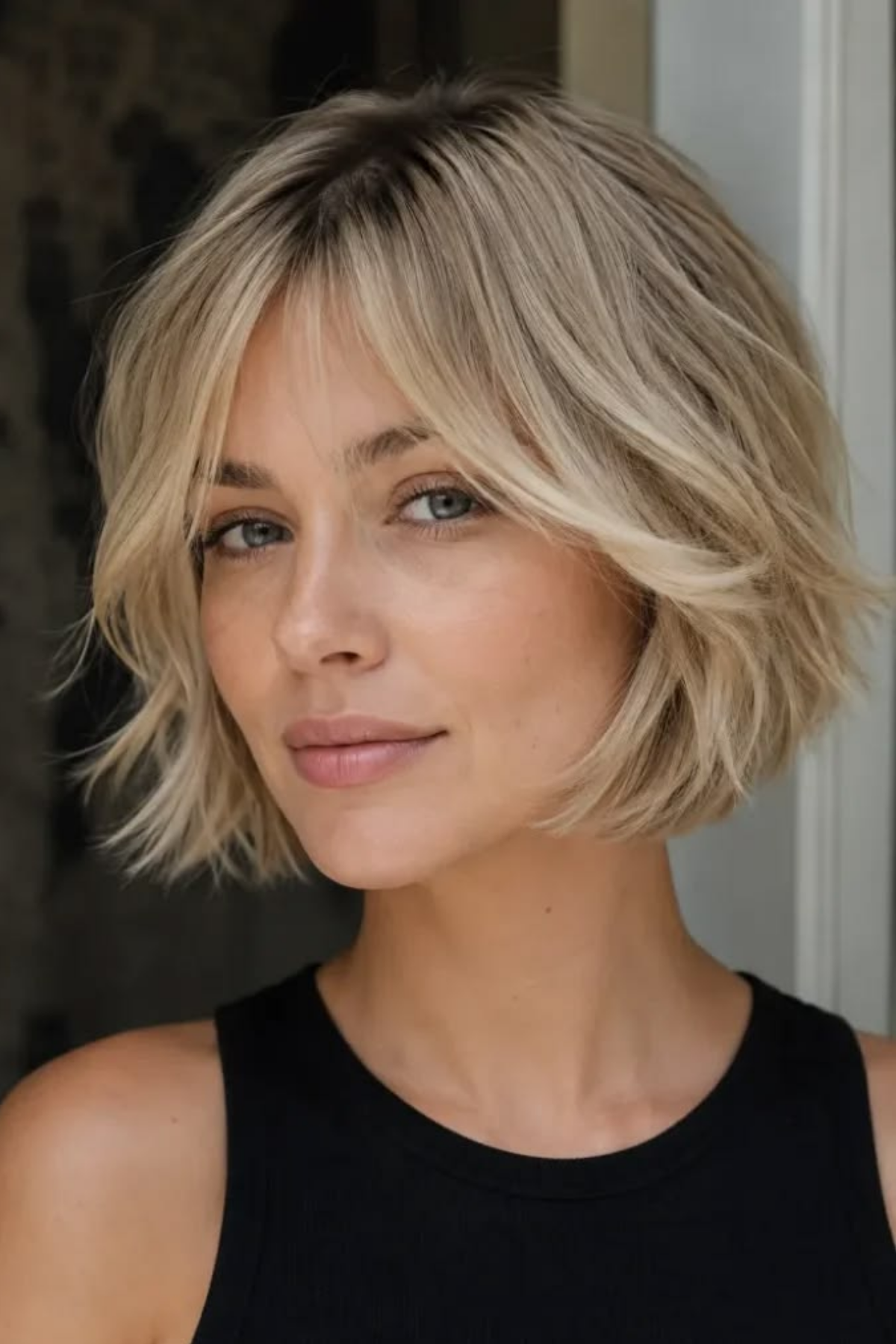
The Short Layered Bob
A short layered bob keeps the bob outline and removes weight above it. The layers sit high enough to lift your crown, which is the top of your head, and that lift is what stops the shape from sitting close and flat against your skull.
Jennifer Aniston's Rachel is the ancestor of the short layered bob. It sat a little longer than a true bob, but the idea is the same: layers cut for movement rather than for length. This is the cut that has movement built into it. A blunt bob hangs as one piece. This one breaks into separate pieces when you run your hands through it, and it keeps doing that on the mornings you don't style it. If a blunt bob has ever felt too severe on you, this is the version to bring a photo of instead.
Source: Pinterest
Who It Suits Best
Fine to medium density that goes flat on top, straight through to wavy, cut between the ear and the jaw. Keep the color simple, because heavy layering chops up a dimensional job and you lose the effect you paid for. Upkeep sits in the middle here, since the layers drop before the outline does.
What to Ask Your Stylist
Length: Ear or jaw, and say which one
Layers: Short internal layers placed high enough to lift the crown
Finish: Point cut, softened through the ends
Bangs (Optional): A soft curtain fringe if you want the face opened up
Pro Tip
Your layers do nothing if you dry your hair hanging down. Flip your head over for the first two minutes. The roots dry standing up instead of lying flat, and the lift you asked for is in the roots, not the ends.
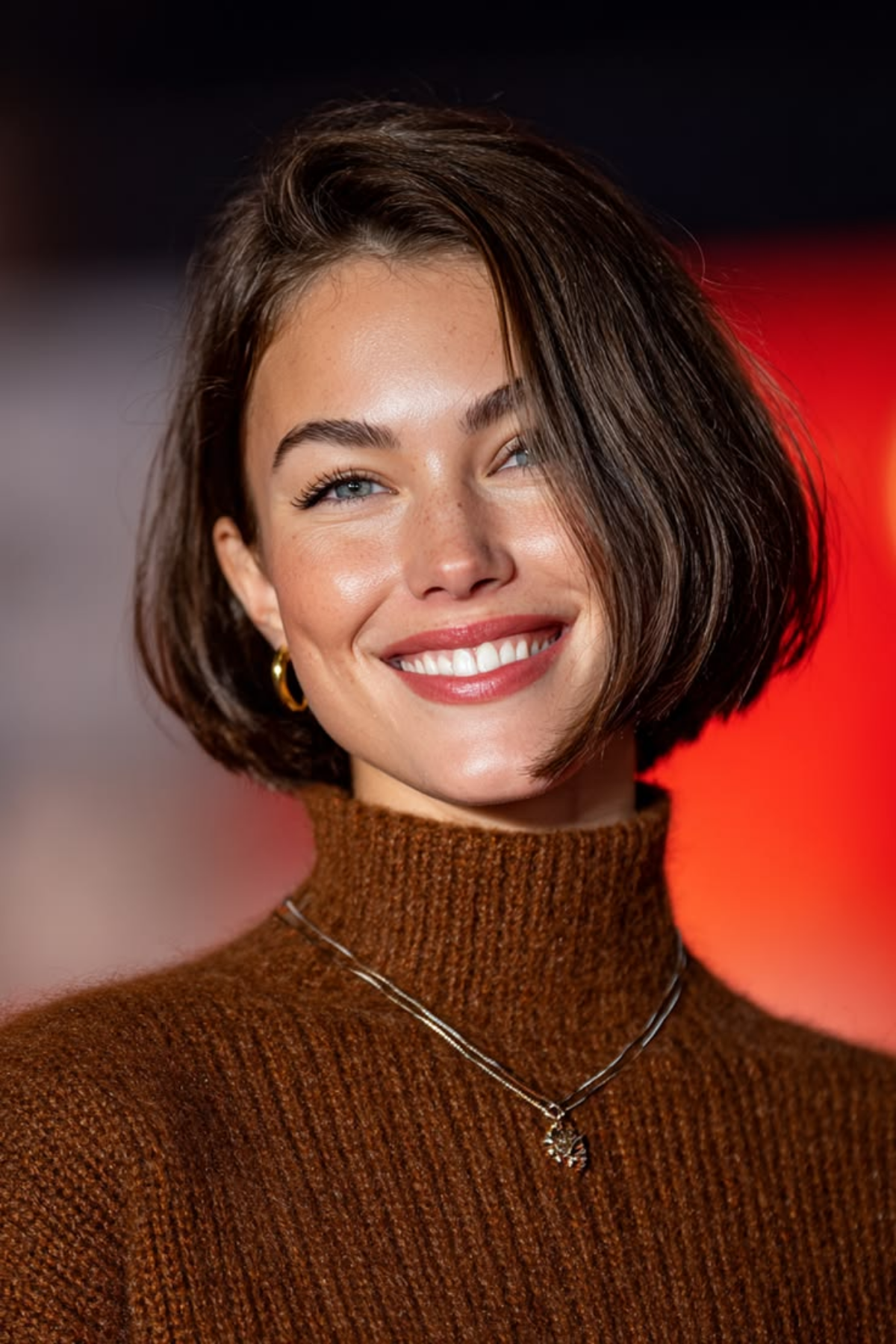
The Italian Bob
The Italian bob is a chin-length bob cut, sharp, with little to no layering and a polished finish. The line sits up at the jaw rather than down near the shoulder, and that height is what makes it read as styled instead of grown out.
The name comes from the shapes Sophia Loren and Monica Vitti wore in Italian film, and it came back around when The White Lotus put it back on screen. In the chair, it's the most finished cut here, and the least forgiving. There are no layers to hide behind on a flat day. You blow it out, or it doesn't work, so be honest with yourself about your mornings before you book it.
Source: Pinterest
Who It Suits Best
Fine to medium density, straight to a soft wave, cut at the chin. A solid or single-tone shade suits it, because the clean line is the point and dimension fights that. On thick, dense hair it needs thinning every time you sit down, which is why I steer most dense-haired clients to another shape.
What to Ask Your Stylist
Length: Chin, level with the jaw
Layers: Minimal to none. Thinning and texturizing through the interior if your hair is dense
Finish: Clean and sharp, not point cut
Bangs (Optional): None, or one long side-swept piece
Pro Tip
Check the back in a mirror once before you leave the salon. If the back sits even a little longer than the front, the cut reads as grown out from behind while the front still looks fresh. It's a two-minute fix in the chair and a six-week problem at home.
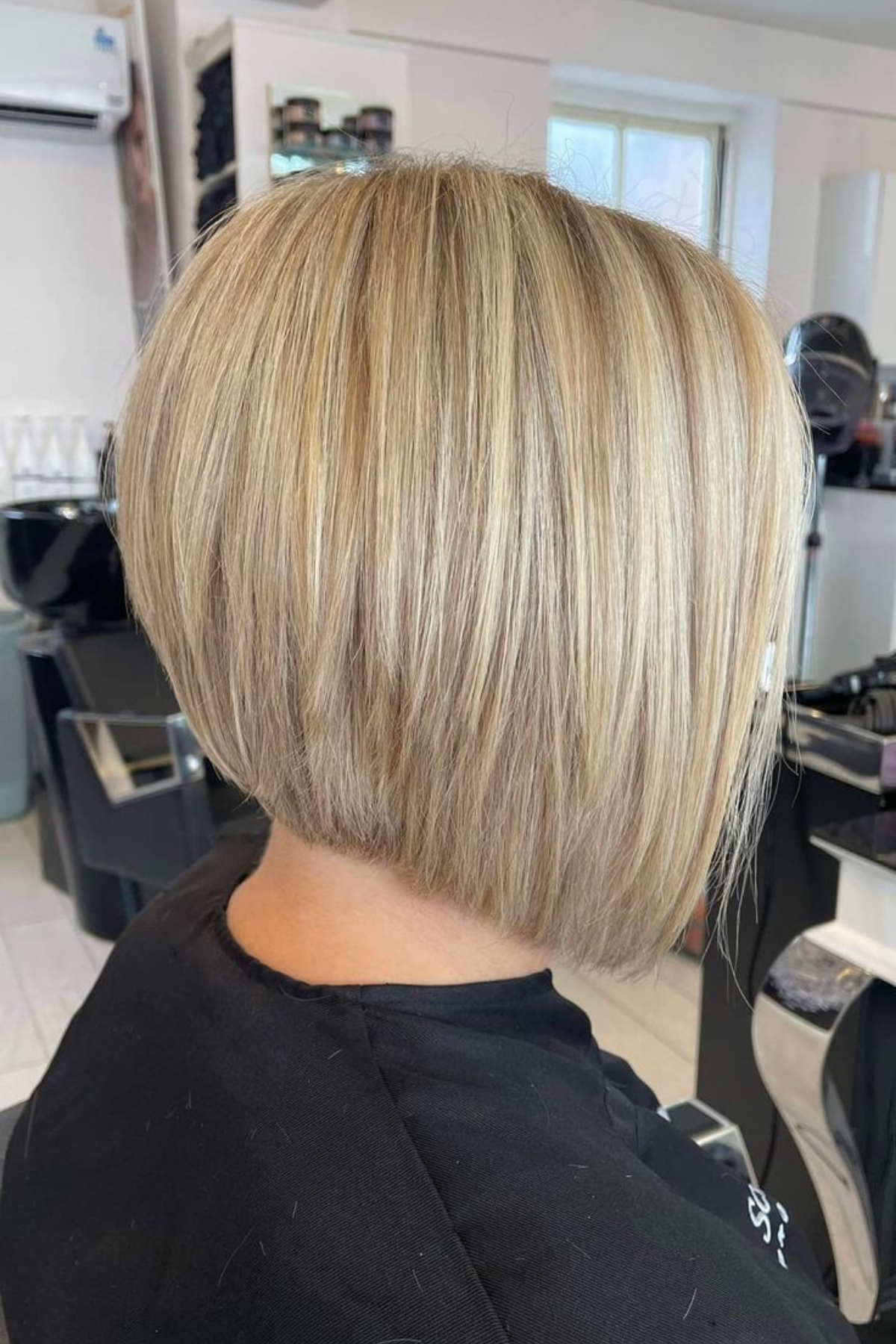
The Stacked Bob
A stacked bob is graduated at the back and longer at the front. Graduation means the layers start short at your nape, which is the part of your neck just below your hairline, and get longer as they come forward. That stacks the weight up and off your neck, so the back sits round and full while the front stays long enough to frame your face.
Victoria Beckham's 2007 cut, the one the press named the Pob, is the version people still bring me a photo of. This is the cut for hair that goes flat at the back by the afternoon. The shape holds itself up, so you get volume behind without building it in every morning.
Source: Pinterest
Who It Suits Best
Fine to medium density that collapses at the back, straight through to wavy, cut at the jaw in front and shorter at the nape. Any color works, though a deeper shade shows the stack more than a light one. The shortest upkeep cycle on this list, because graduation loses its shape as soon as it grows.
What to Ask Your Stylist
Length: Jaw at the front, shorter at the nape
Layers: Graduation through the back, and say how steep you want it
Finish: Blended, so the stack doesn't step
Bangs (Optional): Long face-framing pieces to balance the short back
Pro Tip
Ask to see the angle before any hair comes off. Have your stylist hold the front piece and the back piece together between their fingers so you can see the gap between them. That gap is the whole haircut, and it's a conversation now or a regret later.
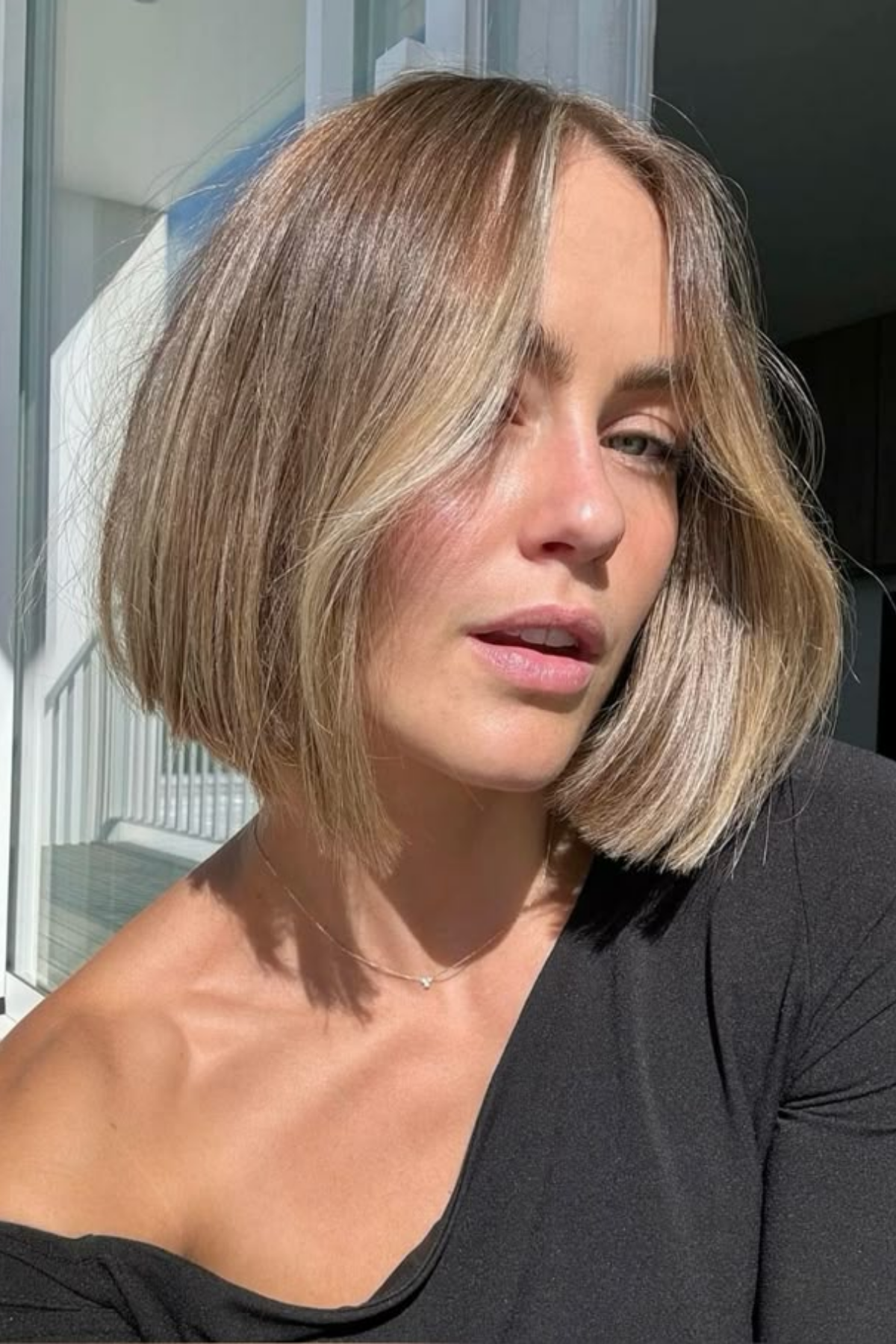
The Jaw-Length Bob
A jaw-length bob finishes level with your jawbone. Not above it, not below it, on it. It can be cut in any of the shapes above, so treat it as a length rather than a rival to them, but that length does its own work. Hair that stops on the jaw draws the eye to your jawline and puts the weight at the widest part of your face.
Louise Brooks is where this length comes from. Her 1920s Lulu bob, sleek and cut level with the jaw, is the haircut that made bobs a thing in the first place, and the shape has barely moved since. This is the length people mean when they say "a classic bob" and can't get more specific. It's short enough to look like a decision and long enough to tuck behind an ear, which is why it's the one I hand to anyone cutting a bob for the first time. It's also the length most often described wrong, and that's how people end up with three inches they didn't agree to.
Source: Pinterest
Who It Suits Best
Any density and any texture, though curly hair has to be cut dry to land on the jaw. Color is wide open, since the length isn't doing anything specific to your shade. Upkeep depends on which shape above you cut it in, so the length itself is neutral.
What to Ask Your Stylist
Length: Level with the jawbone, measured dry, not wet
Layers: Whichever shape above you want. Name it
Finish: Blunt for weight, point cut for softness
Bangs (Optional): Curtain bangs open the face back up if the jaw length feels heavy on you
Pro Tip
Say "jawbone", not "jaw length". Jaw length gets interpreted, and it lands anywhere from the ear to the neck depending on who's holding the scissors. Put a finger on the bone and say cut it here. That one word is the difference between the cut you booked and the cut you got.
How to Choose Your Bob
Pick your bob in this order.
How much hair you have
How many minutes you'll actually spend on it
Your texture
Your face shape
The first one decides whether the shape will hold up. The second decides whether you still like it in month three.
That order isn't how most guides do it, and that's deliberate.
When you come to me with fine hair and ask to go short, whether I say yes rarely comes down to the hair. It comes down to your life. I'll ask how often you're realistically going to style it, and whether you're keeping it short or growing it out again in six months. That answer tells me more than anything I can see on your head.
| Your hair | What a bob does for it | Shapes that tend to work | What to watch for |
|---|---|---|---|
| Fine or thin | Makes it look thicker and fuller straight away, because there's less weight pulling it flat | Blunt bob, Italian bob, chin-length | Too many layers will thin out your ends and undo the effect |
| Medium | Holds the shape on its own, so your choice is about the finish you want rather than what your hair will allow | Blunt or Italian for the most apparent thickness, layered shapes for the most movement | The blunter you go, the sharper it looks and the sooner you'll see the grow-out |
| Thick or dense | Removes serious weight, but only if the bulk is thinned from the inside | Long bob with layers, stacked bob | Widening at the bottom, and upkeep every couple of months to keep it thinned |
| Wavy | Lets the wave show instead of being dragged straight by length | Long bob with layers, short layered bob | Shrinkage, so cut to where it dries |
| Curly | Gives shape and lift that long curly hair loses under its own weight | Layered shapes, cut dry | Shrinkage again, more of it, plus layers placed for your curl pattern |
Bob, According to Your Face Shape
It matters, and it matters last. In a consultation, I tailor the face-framing to what you want to enhance, which is a different question from what shape your face is. Some want their face to look narrower; others want it opened up.
So the useful thing to ask yourself before your appointment isn't "what shape is my face." It's "what do I want this haircut to draw attention to?" Bring that, and a good stylist can work with it.
For the actual matching- which shapes suit which face- I've put the whole thing in the free Haircut Guide so you can work it out before you're in the chair.
Not sure which haircut will flatter your face shape?
Enter your email below and I’ll send you my free haircut guide.
No spam, just great hair advice!
Who Should Think Twice About a Bob
A bob is the wrong call in two situations.
The first is very thick, dense hair where you aren't up for having the bulk thinned regularly.
The second is if you need to be able to tie your hair back on a bad day.
Take the Italian bob. It's the one I steer thick-haired clients away from most often. It's secretly wrong for someone with really thick, dense hair. I'd avoid it unless we're doing heavy thinning and texturizing throughout to break up the weight and take the bulk out.
Even then, super thick hair means a lot more upkeep. You'd likely be back every couple of months just to thin it out and hold the shape, whereas medium to fine hair holds that same cut easily.
That's not a no. It's a yes with a standing appointment attached, and you should know which one you're agreeing to.
The second one catches more people out. A bob short enough to look sharp is usually too short to put up properly. Pieces fall out of a clip, a bun won't hold, and on the days you'd normally scrape it back, you'll end up washing and styling it instead. If your hair going up is how you survive a busy week, go for the long bob and keep the option.
Why the Back of Your Bob Flips Out
Your bob flips out at the back because of how you sleep on it and because of the way your neck curves. That's it. It isn't a bad haircut, and it isn't something you're doing wrong.
The back of your head curves in at the nape and out again at your shoulders, so hair sitting on that curve follows it outward. Add a night with your head pressed into a pillow, and it sets in whatever direction it got pushed. The hair just wants to sit that way.
Which is why you'll restyle more often than you did with long hair. Long hair has the weight to pull itself back down. A bob doesn't.
Pro Tip
Fix the flip in thirty seconds, not a full restyle.Take the Olivia Garden Ceramic 1" + Ion Speed XL round brush and a hairdryer. Lift the nape section up and away from your neck, put the brush underneath it, and roll it under while you point the dryer down the length. Then let it cool for a few seconds before you let go, because hair holds whatever shape it cools in. The one inch barrel is the part that matters. A fat barrel can't turn a section that short. It just smooths it straight, and the flip comes back.
How to Grow Out a Bob
Growing out a bob takes about six months, and it isn't six even months. There's a stretch in the middle where it stops looking like a haircut and starts looking like a length, and knowing when that hits is most of what gets people through it. One thing that surprises everyone: through the awkward stretch, you want more trims, not fewer. A trim gives you a shape to wear while it grows. Here's the whole thing, month by month.
| Stage | Where it sits | What's happening | What to do |
|---|---|---|---|
| Month 2 | Heading for shoulders or collarbone | Loses the sharp line. Back flips out on one side, usually the left, from the curve of your neck | Expect it. Round brush under at the nape |
| Month 4 | At or just below the shoulders | The awkward length. Grown out with no shape left | Go in for a trim to put a shape back on it |
| Month 6 | Longer again | Better, but it can still feel shapeless | Trim again. Add face-framing layers, or lean into the lob with a longer front and shorter back |
| After 6 | Growing on | You're in the clear | Nothing. It grows out nicely from here |
Best Products for a Bob
A bob asks for a few specific things that long hair doesn't. You'll use heat more often, you'll see greasy roots sooner, and you'll be resetting the shape rather than letting length do the work.
These are the five I reach for on a bob, one for each job.
| Product | Best For | Where to Buy |
|---|---|---|
| Moroccanoil Perfect Defense | Heat protection, on damp or dry hair | Buy |
| K18 AstroLift | Root lift on damp hair before you dry it | Buy |
| Color Wow Dream Coat | Wash-day smoothing for a glassy finish | Buy |
| K18 AirWash | Day-two roots without a full wash | Buy |
| Olivia Garden Ceramic 1" + Ion Speed XL | Turning the nape under | Buy |
FAQs: Bob Haircuts for Women
What is the most flattering bob length for an older woman?
Chin-length to just below the jaw tends to be the most flattering, because it keeps weight up near your face where you can actually see it. A longer bob sitting at the shoulder can drag the eye down and flatten what's left at the crown. What actually decides it is your density rather than your age. If your hair has thinned, a blunter perimeter at chin length will give you the most apparent thickness. If it's still dense, you've got the full range of shapes available and it's a styling-time question instead.
What are the most popular bob haircuts right now?
The blunt bob, the French bob, the long bob with layers and the Italian bob are the four I get asked for most. Popularity is a poor way to choose, though, because all four are variations on the same haircut with the weight moved to a different place. The blunt bob keeps all the weight down at the bottom, while the long bob uses layers to take bulk out of the middle so the outline stays put and the hair still moves. The French bob shortens the whole thing and adds a fringe, and the Italian bob sharpens the line at your chin. Pick by what your hair can hold rather than by what's trending.
What is the trend for bob haircuts in 2026?
Honestly, the most useful answer is that it rotates. Most of what trends in haircuts is a classic coming back around. We had the moment where the short bob was everywhere and everyone wanted to go short, and then it swung back to longer hair with layers. It'll swing again, probably before you've finished growing this one out. A shape chosen for your density and your routine outlasts all of it.
Do bobs make you look older or younger?
A bob doesn't age you. Done well it makes you look more polished and put together. The version that reads older is the very blunt, one-length bob with no softness anywhere around the face, and the problem there is the fit rather than the length. When a bob is cut to work with your face shape and your texture, it genuinely enhances you. When it isn't, it can age you, or it can simply not suit you. That's why the consultation matters more than the reference photo.
Who should not get a bob cut?
Two groups. If your hair is very thick and dense and you aren't willing to come in every couple of months to have the bulk thinned, a bob will widen out at the bottom instead of hanging the way you wanted. And if being able to tie your hair back is how you get through a busy week, a short bob will frustrate you, because it won't hold in a band and you'll be restyling on the mornings you have the least time. A long bob keeps that option open and is the better call.
Final Word from Haiirology
Bob haircuts for women all come back to one shape, with the weight moved around. The version you'll still love in month four is the one that fits your density and the time you really have.
Photographs are a poor guide to either. So start there, then your texture, then your face shape. The grow-out turns awkward around month two, and it eases again after month six.
Book the trim instead of panicking. The free Haircut Guide walks you through matching your own face to a cut before you're in the chair.
Tell me which one you're booking over on Instagram.
Free Haircut Guide
Find Your Perfect Haircut for Your Face Shape
Take the guesswork out of your next haircut and find the styles that flatter your face shape before you sit in the salon chair.
- ✓ Identify your face shape
- ✓ Get personalized haircut ideas
- ✓ Learn what to ask your stylist for
No spam, just great hair advice!




You've saved the pictures. The hard part is knowing which bob suits your density, your texture, and the time you actually have. A stylist walks through every type of bob and who each one is really for.