17 Haircuts for Women Over 50 That Look Fresh and Modern
TL;DR
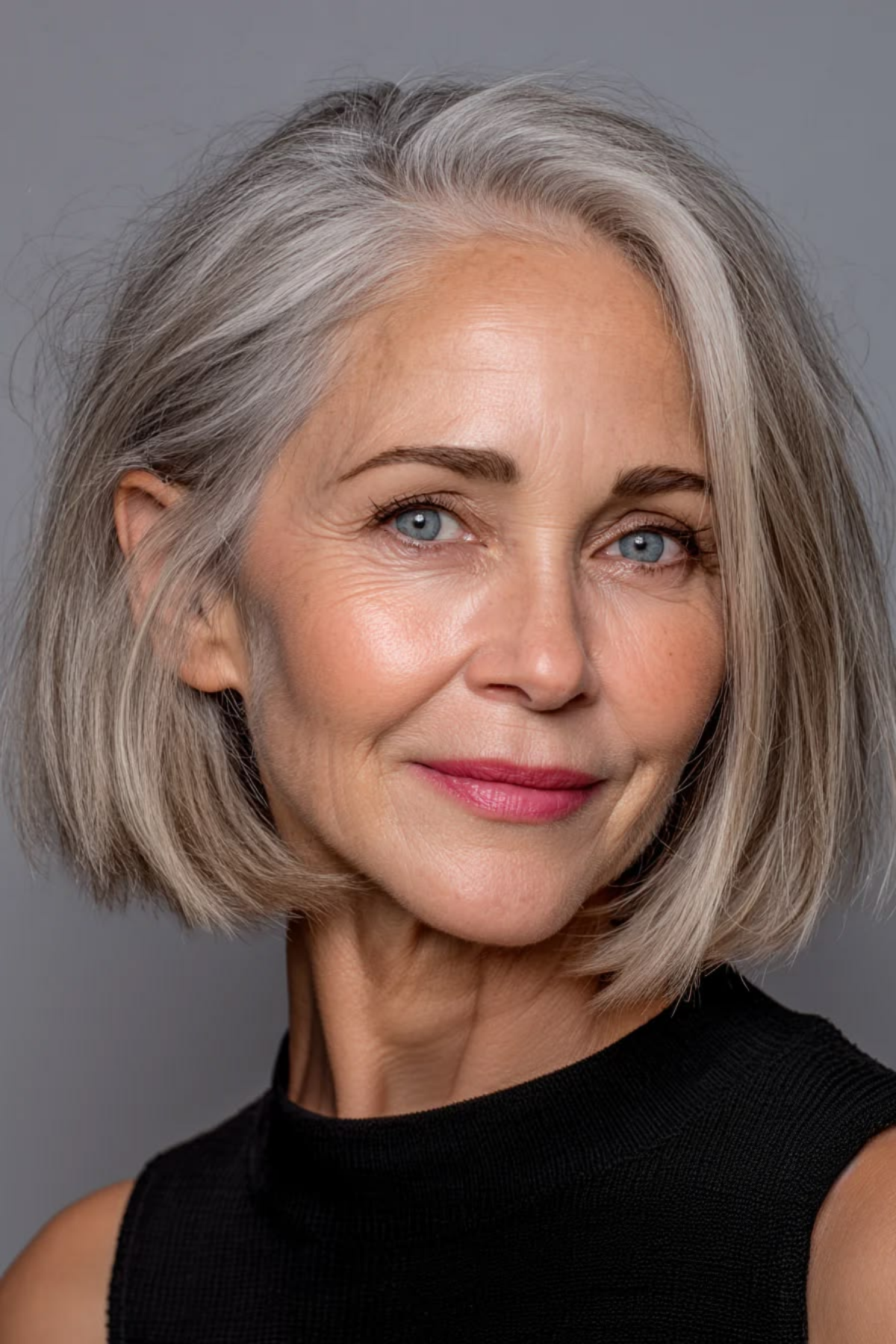
The best haircuts for women over 50 work with your hair as it is now. If it’s gotten thinner or you’re embracing more grey, keep the ends looking full and add softness around the face. A blunt cut with long face-framing layers is a great place to start because it creates fullness without losing movement. Below, you’ll find 17 short, medium, and long cuts to choose from, plus what to ask your stylist for.
If you want the version matched to your face, my free Haircut Guide walks you through it.
Once you hit 50, people suddenly start telling you it’s time to go short. But you don’t have to cut off your hair just because you’ve reached a certain age.
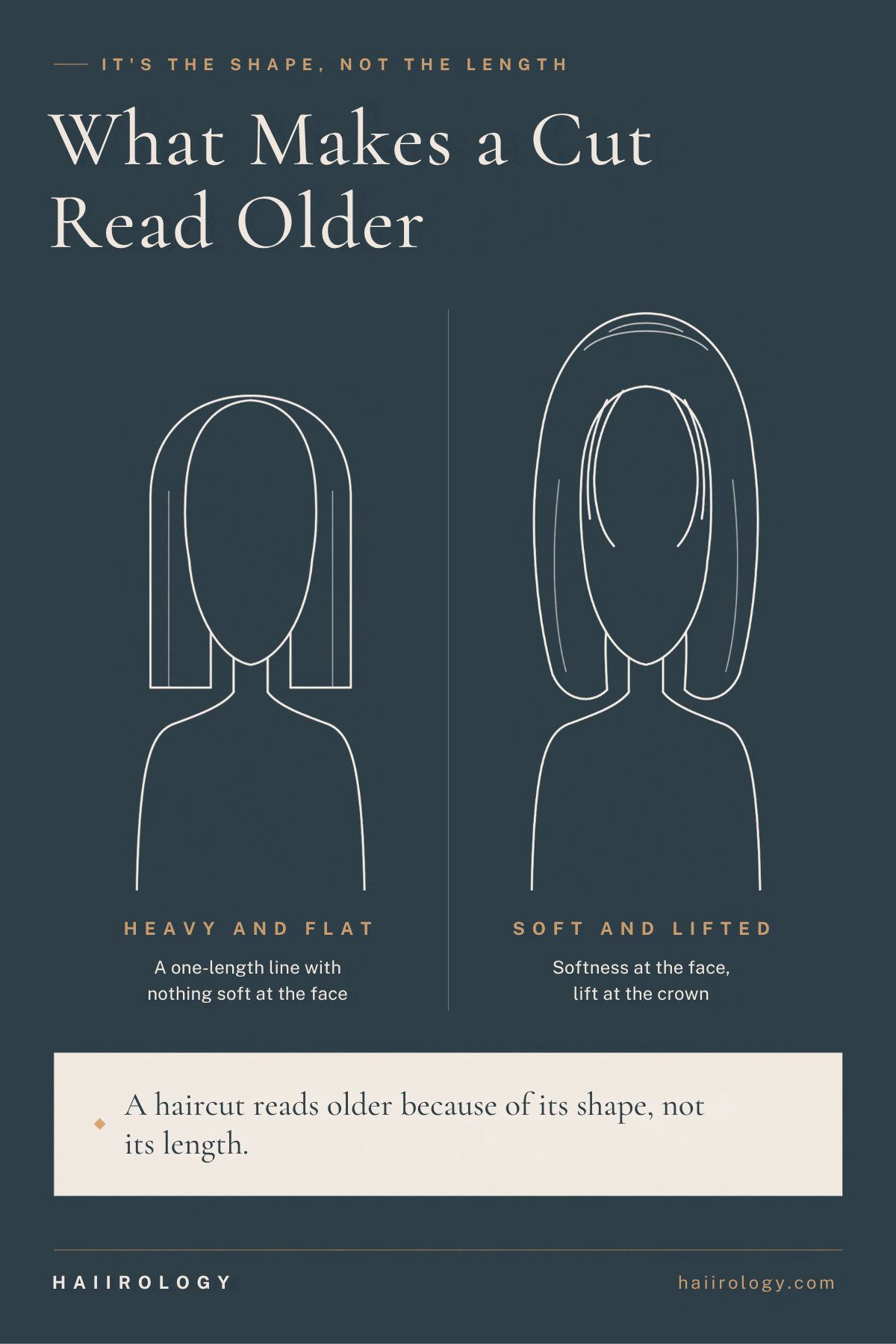
What matters more is the shape of the cut. Long hair can look just as fresh and flattering when it has the right movement and softness around your face. Even a small change, like adding face-framing pieces instead of keeping everything one length, can make a big difference.
When I’m choosing haircuts for women over 50, I look at the hair you have now, how you normally wear it, and how much styling you actually want to do. That tells me far more than your age ever will, and it helps us choose a cut you’ll still love once you’re styling it yourself at home.
What Changes in Your Hair After 50
Hair often changes in your 50s. You may notice more grey, finer strands, less density, or more shedding than before. Menopause can also affect the hair growth cycle, which is why some women notice thinning around the hairline or crown.
The goal isn’t to hide those changes. It’s to choose a cut that works with them.
If Your Hair Is Thinner, Keep Fullness at the Ends
For thinning or fine hair, I usually keep more weight at the bottom. A blunt cut with long face-framing layers is one of my go-to options because the solid baseline makes the ends look fuller, while the longer pieces around your face add softness and movement.
If your hair is very fine, I may skip the layers completely. A one-length blunt cut keeps as much density as possible.
You’ll see both approaches below in Cut 6, the Blunt Bob; Cut 9, the Mid-Length Cut with Face-Framing Layers; and Cut 17, the Long Cut for Fine Hair.
Choose the Cut for Your Face Shape, Not Your Age
When choosing haircuts for women over 50, I look at your face shape, hair density, and texture before your age.
A cut that adds length or width in the wrong place can make you look older than you really are. That’s where face-framing layers help. We can keep the ends full while placing softer pieces around your face where they flatter your features most.
Now, let’s get into the 17 cuts and find the shape that works for you.
17 Haircuts for Women Over 50
I’ve included short, medium, and long options below, so start with the length you’re comfortable with and then look at what each cut works best for. Pay attention to your hair density, texture, and how much styling you want to do each day that will help you narrow down the cuts that make the most sense for your hair.
The Soft Textured Pixie
A soft textured pixie is cut short at the sides and the nape, with a few inches left on top. The top is cut with restraint, so it reads full rather than wispy. That extra length on top gives fine hair something to lift, while the short sides keep the shape neat. Judi Dench has worn a version of this short, soft crop for decades.
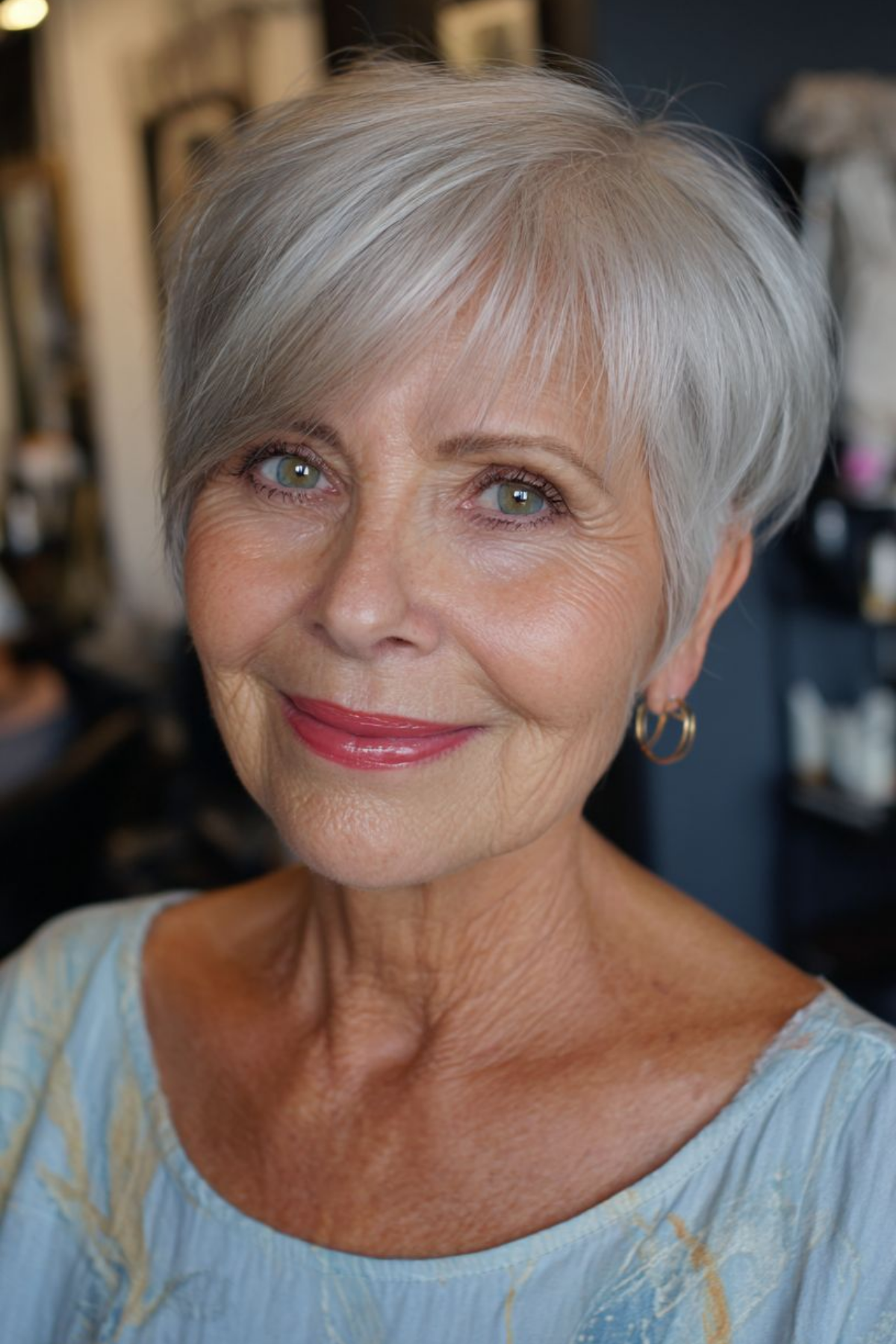
Source: Pinterest
Best Suited For: Fine hair with lower density, straight to barely wavy, in any color, including silver. Short hair makes fine hair look thicker and fuller, which is why this is one of my favorite pairings. It does ask for a few minutes of styling every day, so it suits you if you're happy to do that.
What to Ask Your Stylist:
Length: Short at the sides and nape, with a few inches left on top
Layers: Graduated from the crown forward
Finish: Point cut through the top for separation
Bangs (optional): A soft, short fringe blended into the top
Back / nape: A tapered nape. Your nape is the back of your neck under your hair, and tapered means it gets gradually shorter toward your hairline
Pro Tip
Use this on completely dry hair. Hold the Bumble and Bumble Thickening Dryspun Texture Spray about 10 inches away and spray lightly at the roots where you want more lift. Use your fingertips to lift and separate the hair, and skip the comb so you don’t flatten the volume.
The Bixie
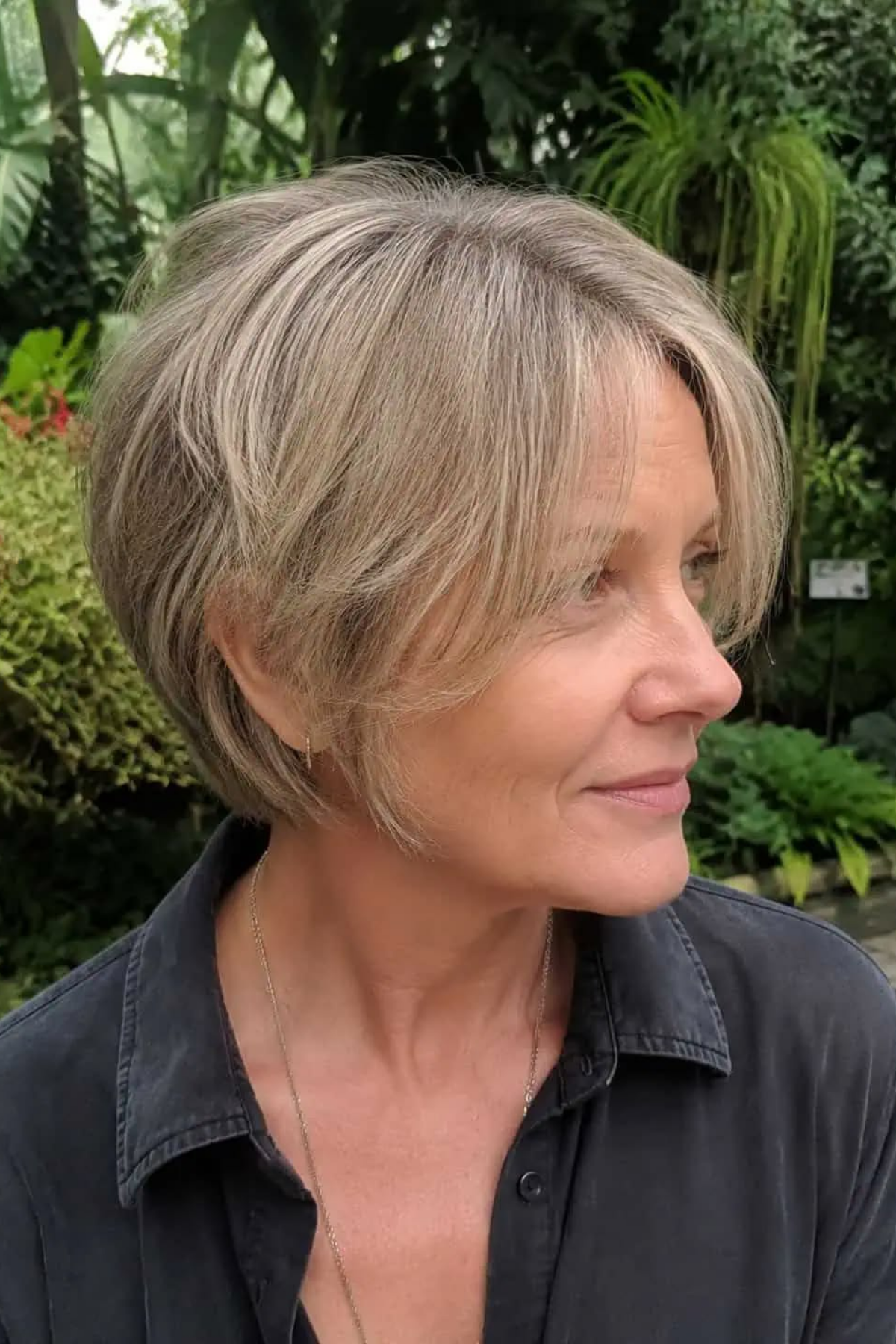
The bixie sits halfway between a bob and a pixie. It's cut shorter through the back and left longer and softer at the front and sides, so it frames your face without the full commitment of a pixie. The back is cropped close and blended up into the longer pieces, so the shape moves from short to soft as it goes forward.
Source: Pinterest
Best Suited For: Fine, medium or thick hair in any color can wear a bixie, because it's all in how your stylist cuts it, and fine hair looks fuller the shorter it goes. Thick hair works too once the bulk is thinned out, and you'll need regular trims to keep the back short. I'd steer you away from it if you don't feel confident going short or you're already worried about styling it.
What to Ask Your Stylist:
Length: Cropped at the back, chin to cheekbone length at the front
Layers: Blended through the crown
Finish: Soft, textured ends, and on thick hair ask for the bulk to be taken out
Bangs (optional): Longer side-swept pieces
Back / nape: Cropped short and blended into the longer front
Pro Tip
If your bixie falls flat at the crown, mist amika The Shield Anti-Humidity Spray over damp hair, then blow-dry the crown with a round brush. While the hair is still warm, set it in a couple of Velcro rollers and leave them in until completely cool. Once you take them out, mist a little Bumble and Bumble Thickening Dryspun Texture Spray at the roots to help the lift hold.
The Stacked Bob with a Graduated Nape
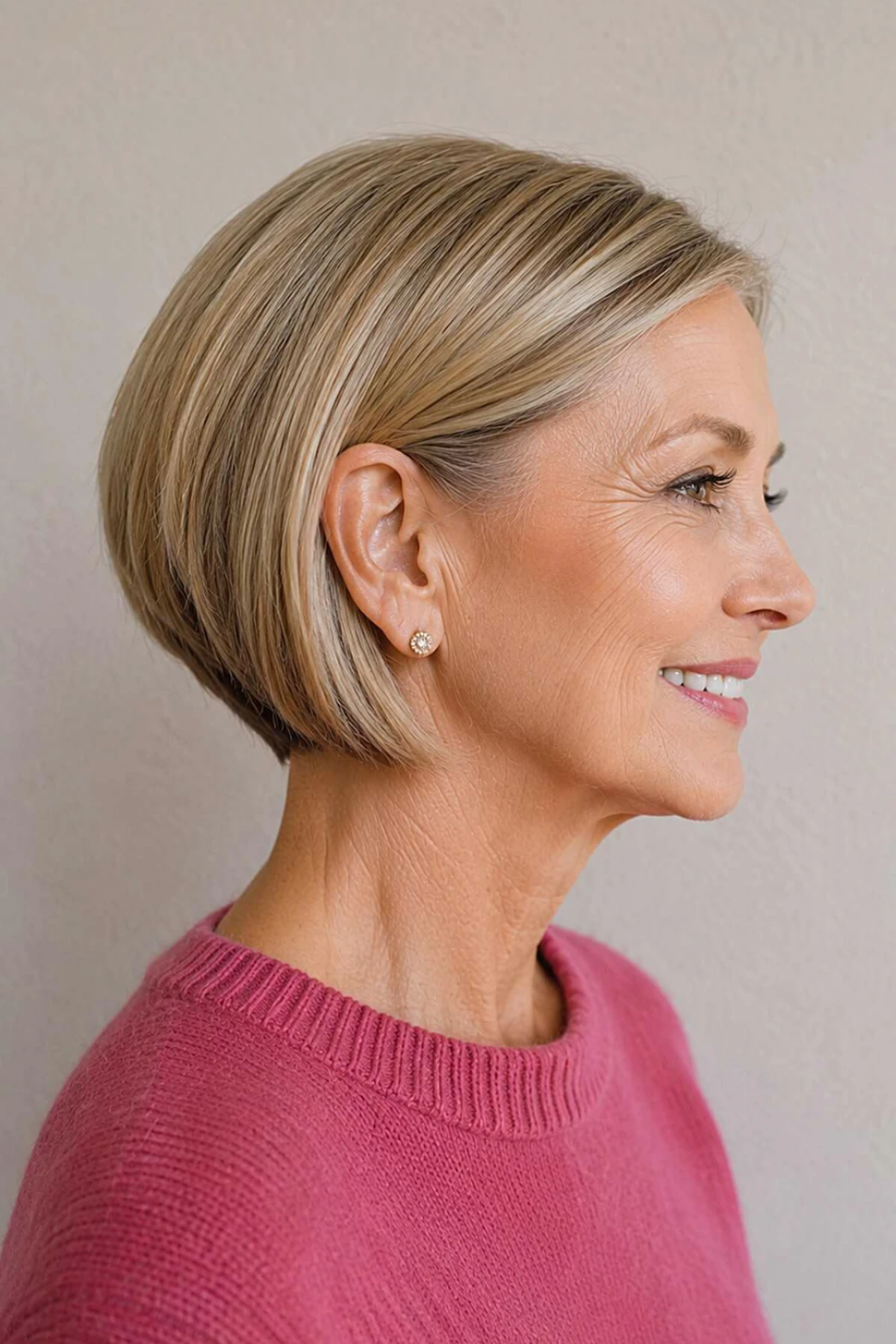
A stacked bob is shorter at the back and longer at the front, with the back cut in short layers that sit on top of each other. Those stacked layers build height at the crown on their own, so the cut lifts exactly where hair tends to flatten. From the side, it angles down toward the jaw. Victoria Beckham's 2007 "Pob" made this shape famous.
Source: Pinterest
Best Suited For: Fine hair that's sparser at the crown, straight to slightly wavy, in any color, grey included. If your hair is all one length, that's often part of why it falls flat, and the stack fixes that with shape. Expect regular trims to keep the stack lifted.
What to Ask Your Stylist:
Length: Jaw-length at the front, shorter at the back
Layers: Stacked graduation through the back only
Finish: Clean at the front edge, soft through the stack
Bangs (optional): None
Back / nape: Short and graduated, because the stack is the whole cut
Pro Tip
For more lift at the crown, spray K18 AstroLift Reparative Volume Spray at the roots while your hair is damp. Lift the crown up and forward with a round brush as you blow-dry, and keep it there until the roots are completely dry. Your hair sets in the position it dries in, so this gives you more lift without teasing.
The Soft Layered Chin Bob
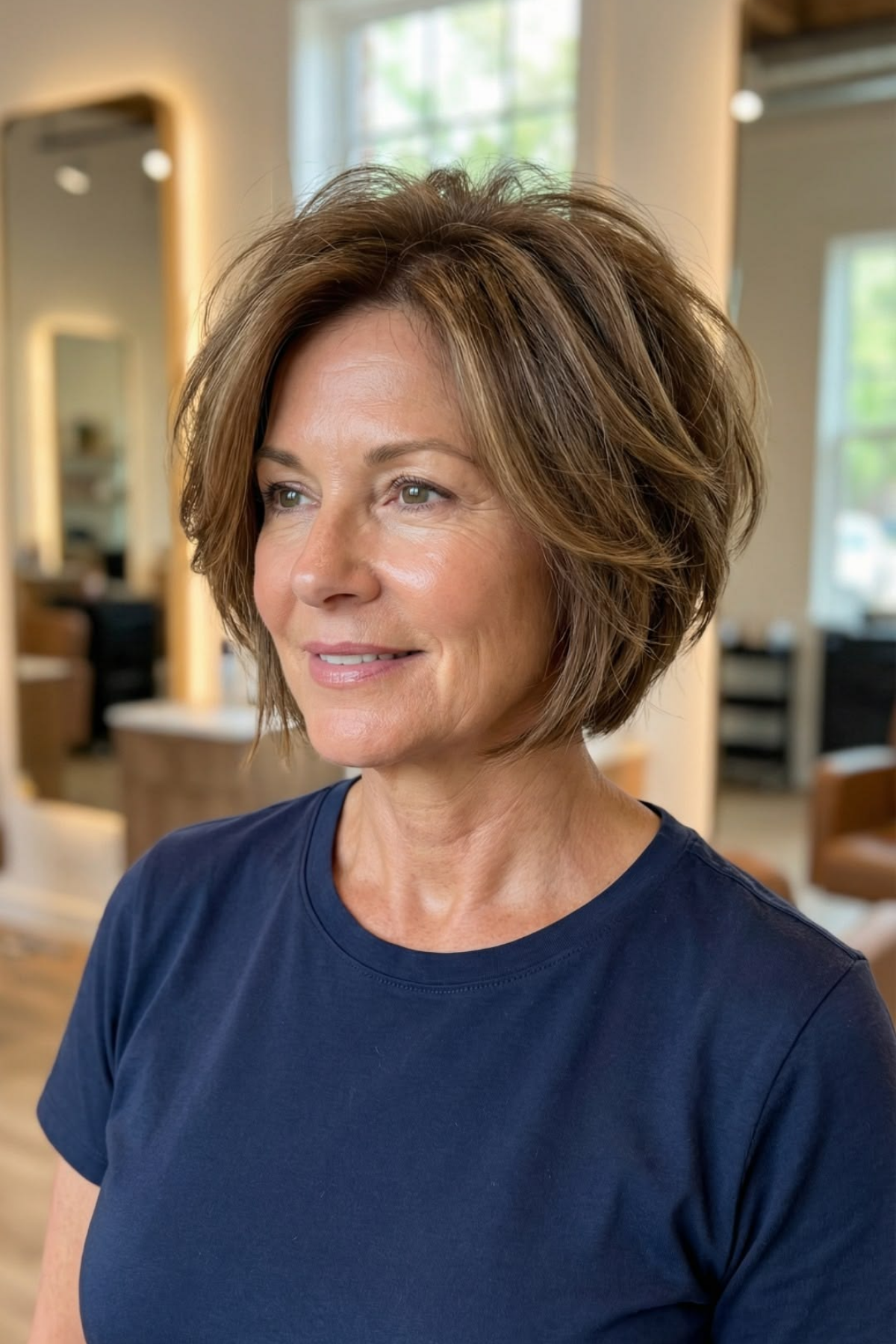
The soft layered chin bob sits right at the chin, with soft layers through the ends and face-framing pieces at the front. Those layers let the line move, which is what keeps it from looking like a helmet. It's a good fit when you want short hair that frames your face without a hard edge.
Source: Pinterest
Best Suited For: Fine to medium density, straight or wavy, and it works on any color, including grey that's coming in at the temples. It suits you if you want a bob but you're worried about the stiff version. Be honest about the grow-out, though: between months two and four the back starts to flip, so a trim around month four keeps it looking like a haircut.
What to Ask Your Stylist:
Length: At the chin
Layers: Soft layers through the ends, face-framing at the front
Finish: Softened, not blunt
Bangs (optional): Long side pieces
Pro Tip
If your chin bob looks flat on day two, spray amika Perk Up Dry Shampoo about 8 inches from the roots at your crown. Let it sit for about 30 seconds, then massage it in with your fingertips while lifting the roots. It absorbs excess oil and brings the volume back without another wash.
The Italian Bob
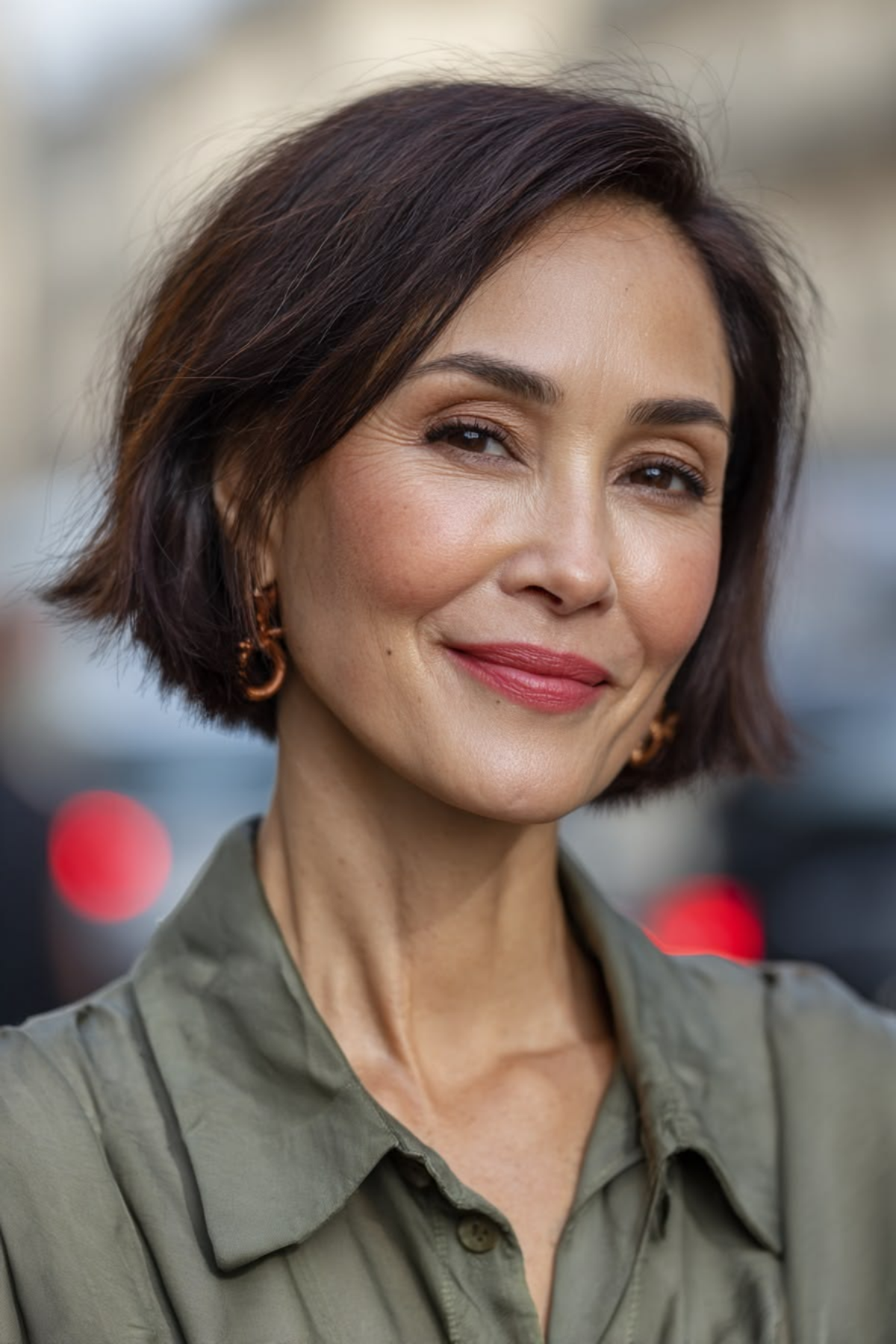
The Italian bob sits right around the chin, with sharp, clean lines and almost no layering. Sitting at the chin gives it more defined lines than a bob that falls to the shoulder, while you still keep a little length. If the ends are bulky, your stylist softens the weight at the bottom so it still reads sharp.
Source: Pinterest
Best Suited For: Fine to medium density, straight, in any color. It's the most put-together short option in this list. It's wrong for really thick, dense hair, though, unless your stylist thins it heavily, and even then you'd be back every couple of months to keep the shape.
What to Ask Your Stylist:
Length: Right at the chin
Layers: Minimal to none
Finish: A clean, defined edge, texturized only if the ends feel bulky
Bangs (optional): None
Pro Tip
For a smooth, polished finish, apply Color Wow Dream Coat Supernatural Spray evenly through clean, damp hair and comb it through. Blow-dry with the nozzle pointing down the hair and use your brush to turn the ends under. Keep drying until your hair is completely dry so the heat can activate the product.
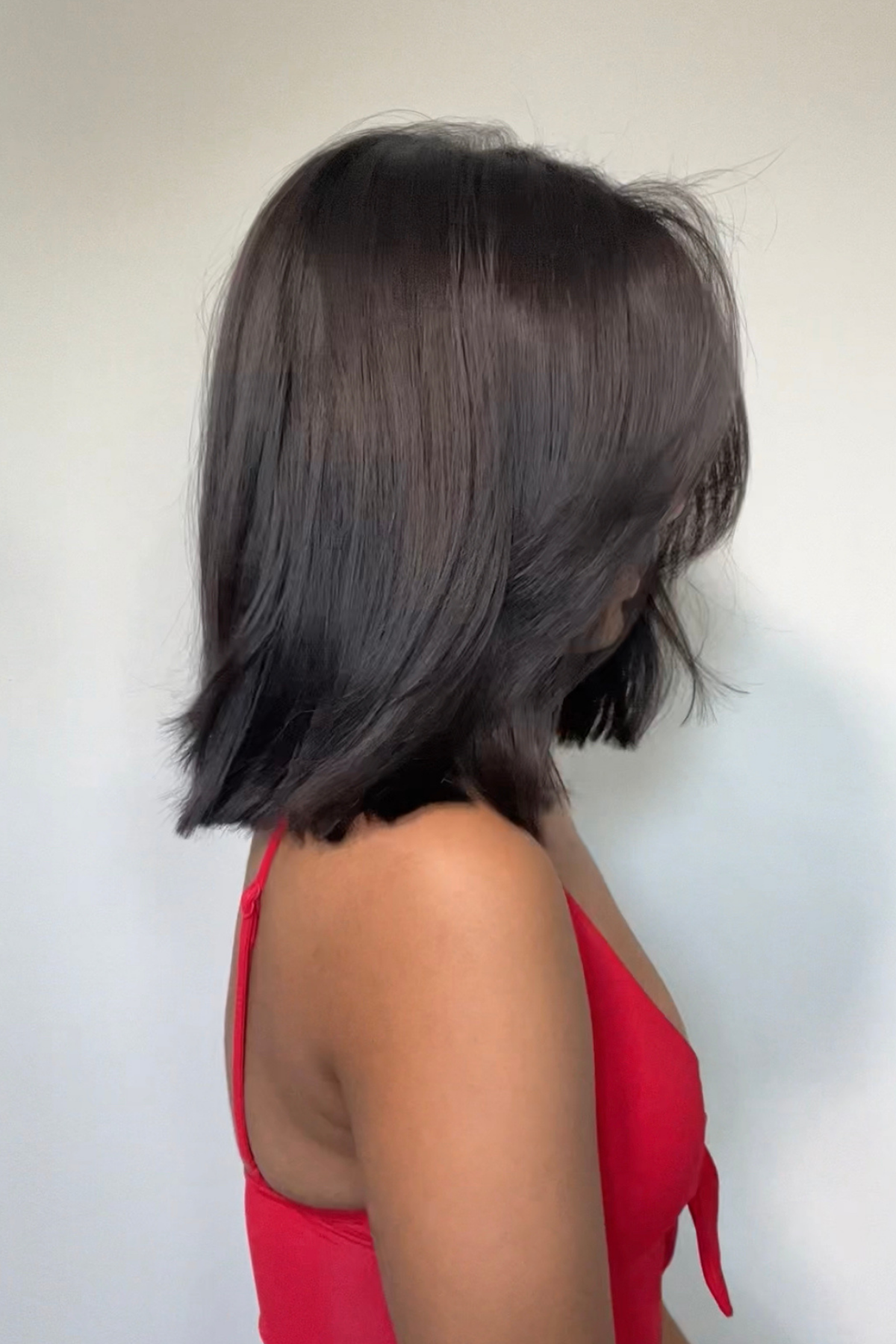
The Blunt Bob
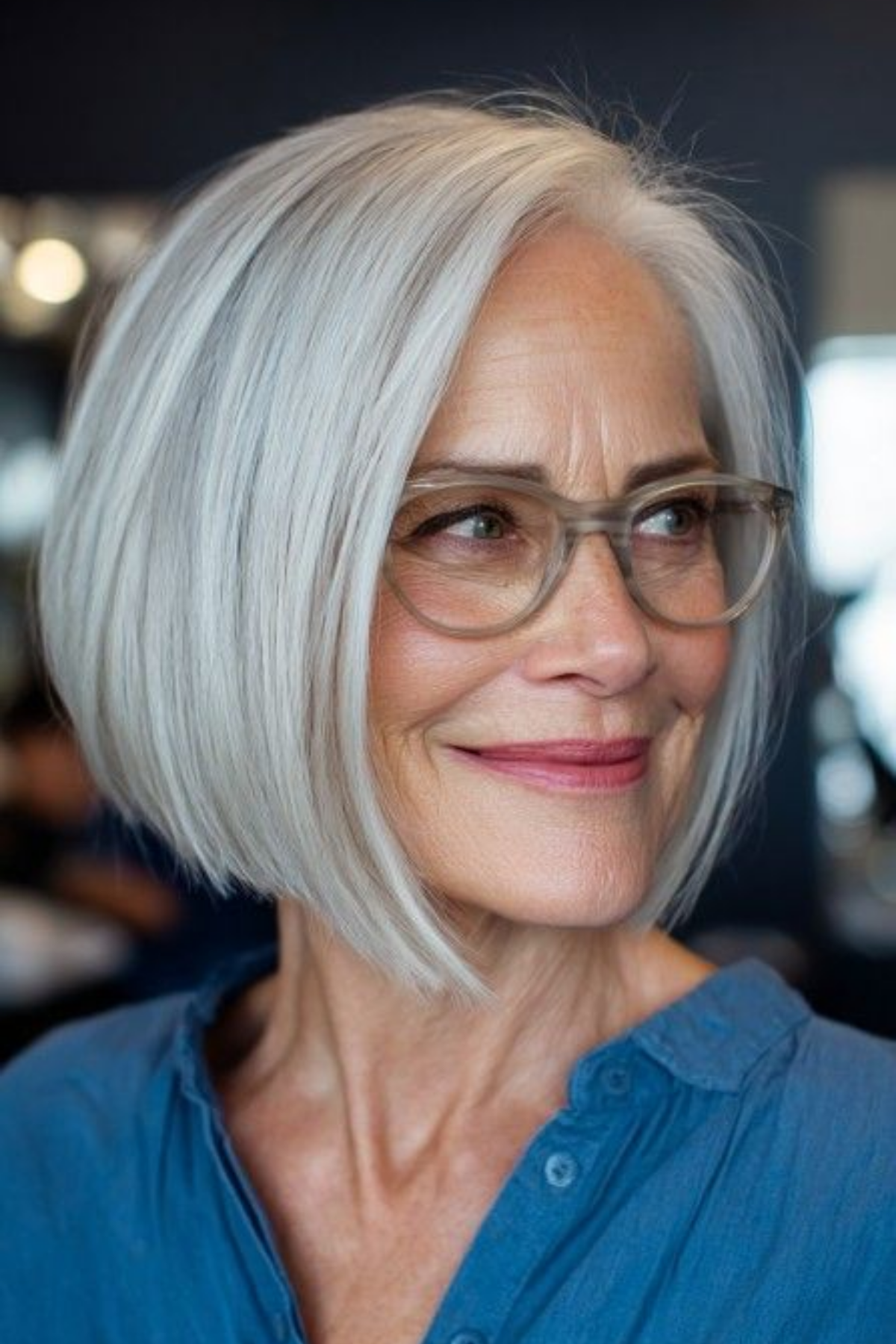
A blunt bob is one length, cut straight across at the jaw or just below, with no layers inside it. On fine hair, every strand ends at the same line, so the hair looks thicker than it is. On its own, with nothing soft at the front, it can read older on some clients, so leaving two long pieces at the front softens it.
Source: Pinterest
Best Suited For: Fine, straight hair, in any color, grey included. Shorter hair seems easier, but it isn't. Once a blunt bob grows out two to three inches it loses its shape, so this one suits you if you'll book regular trims.
What to Ask Your Stylist:
Length: At the jaw or just below, one length
Layers: None, or two long face-framing pieces for softness
Finish: Blunt
Bangs (optional): None
Back / nape: A clean, straight line at the back, because the line is the cut
Pro Tip
For a softer blunt bob, ask your stylist to keep the main line sharp but leave two longer pieces around the front to frame your face. Book your next trim before you leave too, a blunt bob starts losing its clean shape once the ends grow out.
The Short Shag
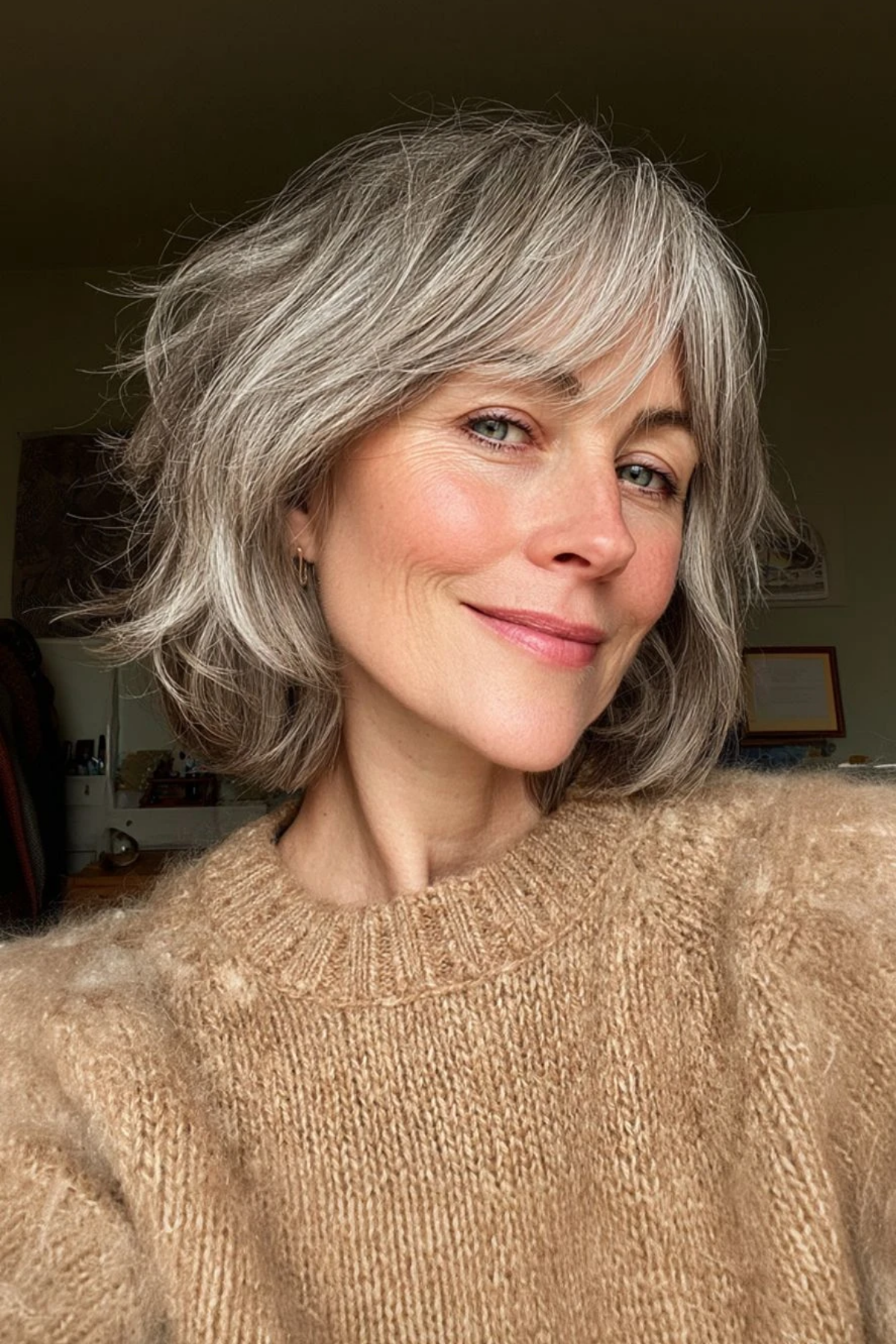
A short shag has short, piecey layers all the way through, tapered at the ends so they separate. It's meant to be worn with your natural texture, and that's when it looks its best. Jane Fonda wore one of the best-known shags on film, in Klute.
Source: Pinterest
Best Suited For: Wavy or curly hair, medium to thick, in any color, worn with its natural texture and kept piecey with a clean-up every so often. If you like a choppier, textured look, a shag works with your texture instead of fighting it. I'd talk you out of it if your hair is super baby fine, because that hair doesn't hold the shape.
What to Ask Your Stylist:
Length: Above the shoulder
Layers: Short, piecey layers all the way through
Finish: Tapered, textured ends
Bangs (optional): A shaggy fringe that skims your brows
Pro Tip
To bring out the piecey ends of a shag, use Bumble and Bumble Thickening Dryspun Texture Spray on dry hair. Mist it through the mid-lengths and ends, keeping it away from the roots, then scrunch the ends with your hands. This separates the layers and gives the shag that soft, textured finish.
The Lob
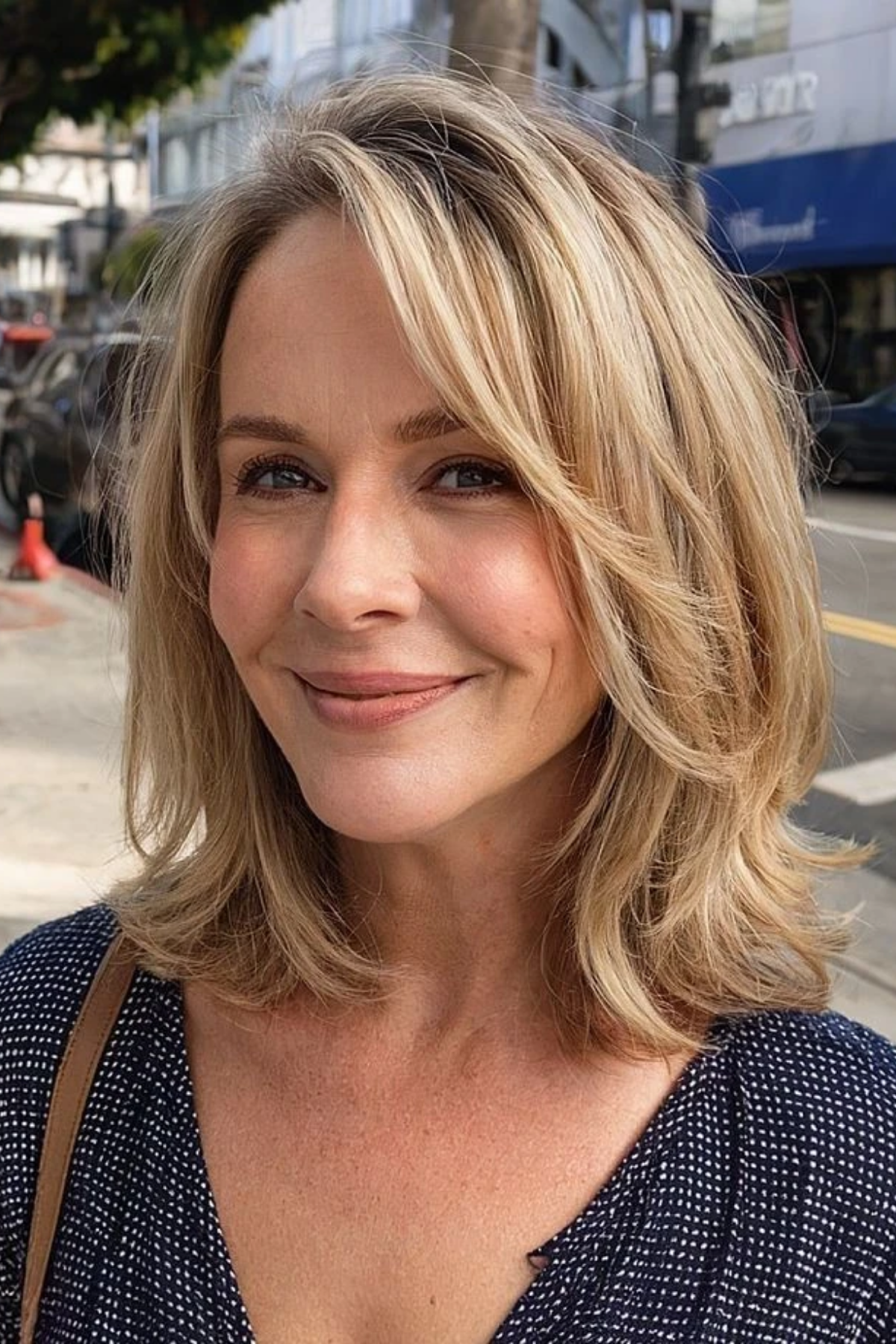
A lob is a long bob that sits between the jaw and the collarbone. It's long enough to tuck behind your ears or pull back. If you don't love styling often, or you aren't up for growing out a shorter cut, a mid-length like this is the length I steer you toward. It still feels short, but you aren't constantly maintaining it.
Source: Pinterest
Best Suited For: Fine to medium hair, straight or wavy, in any color. It suits you if you want a change without a big chop. It's easy to tuck behind your ears or pull back on the days you don't style it.
What to Ask Your Stylist:
Length: Just above the collarbone
Layers: Long, soft layers, or none
Finish: A soft edge
Bangs (optional): A curtain fringe if you want one
Pro Tip
For a soft bend around your face, apply amika The Shield Anti-Humidity Spray to towel-dried hair, then use the Shark FlexStyle Air Styling & Drying System to rough-dry until your hair is about 80% dry. Switch to the curler attachment for the front sections only, and leave the back straight for an easy, face-framing finish.
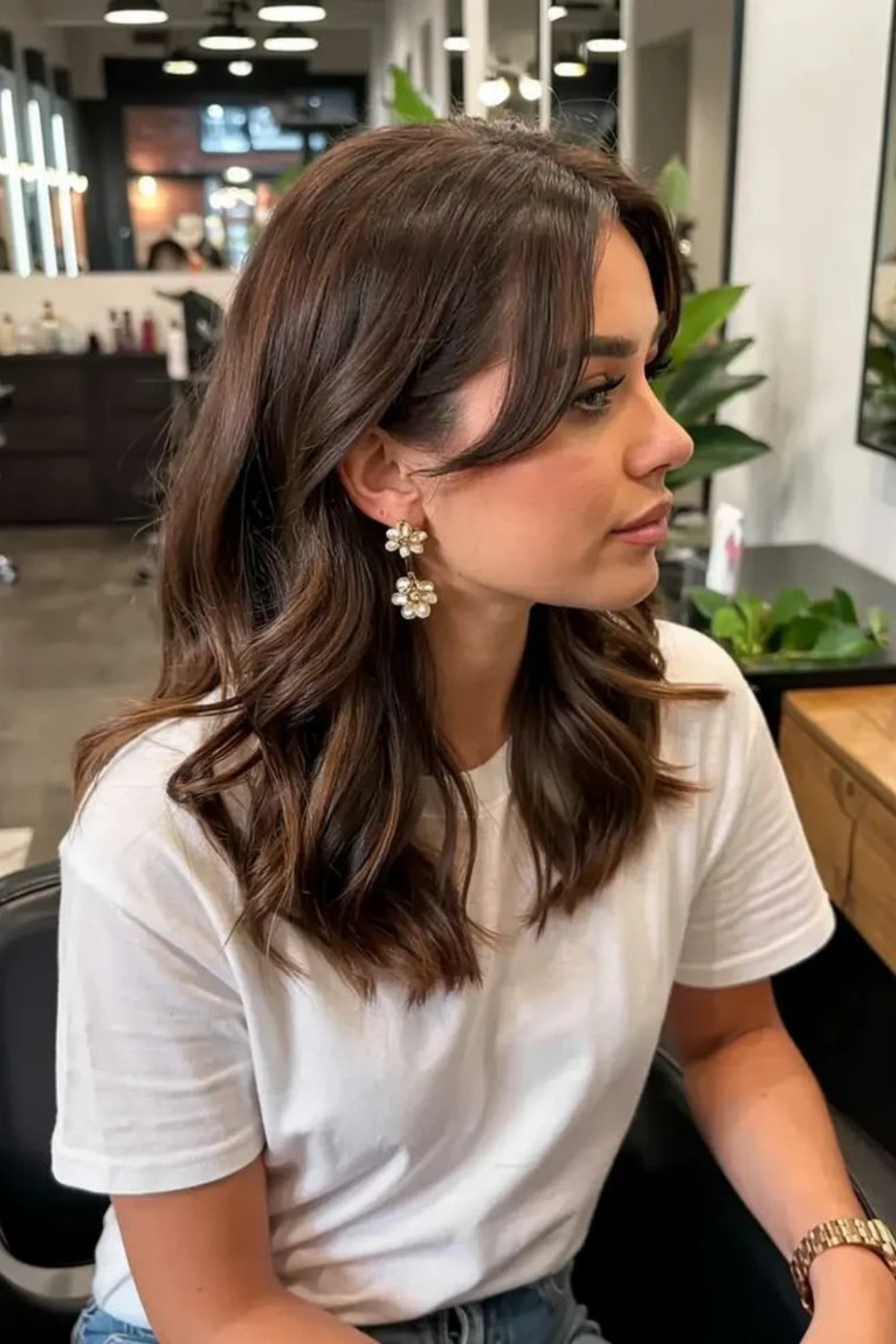
The Mid-Length Cut with Face-Framing Layers
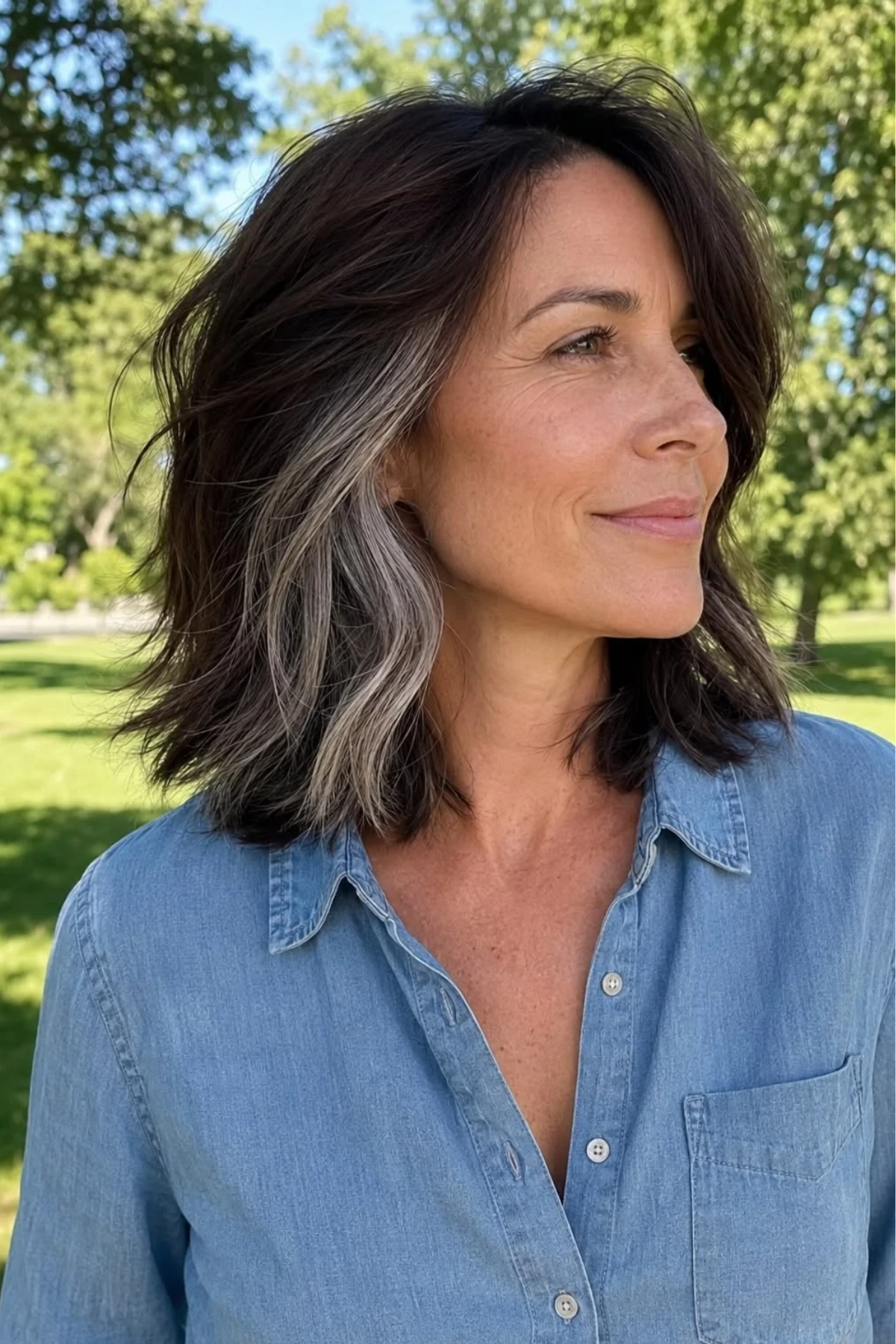
This cut sits at or just past the shoulder, with face-framing layers shaped around your face. The framing is the cut, so the back can stay simple. For clients over 50, those front layers are the one thing I do differently on a medium-length cut. I'm a little more intentional with them.
Source: Pinterest
Best Suited For: Medium to thick hair, straight or wavy, in any color. It suits you if you like your length and want the front to do more for your face. The front layers are what you'll keep up with at each trim.
What to Ask Your Stylist:
Length: At or just past the shoulder
Layers: Face-framing layers, shaped to what you want them to do for your face
Finish: Soft
Bangs (optional): Blended into the face-framing
Pro Tip
Before your stylist cuts your face-framing layers, tell them what you want the front to do—open up your face, add softness, or make it look a little longer. Your goal and face shape will help your stylist decide exactly where the layers should start and how long they should be.
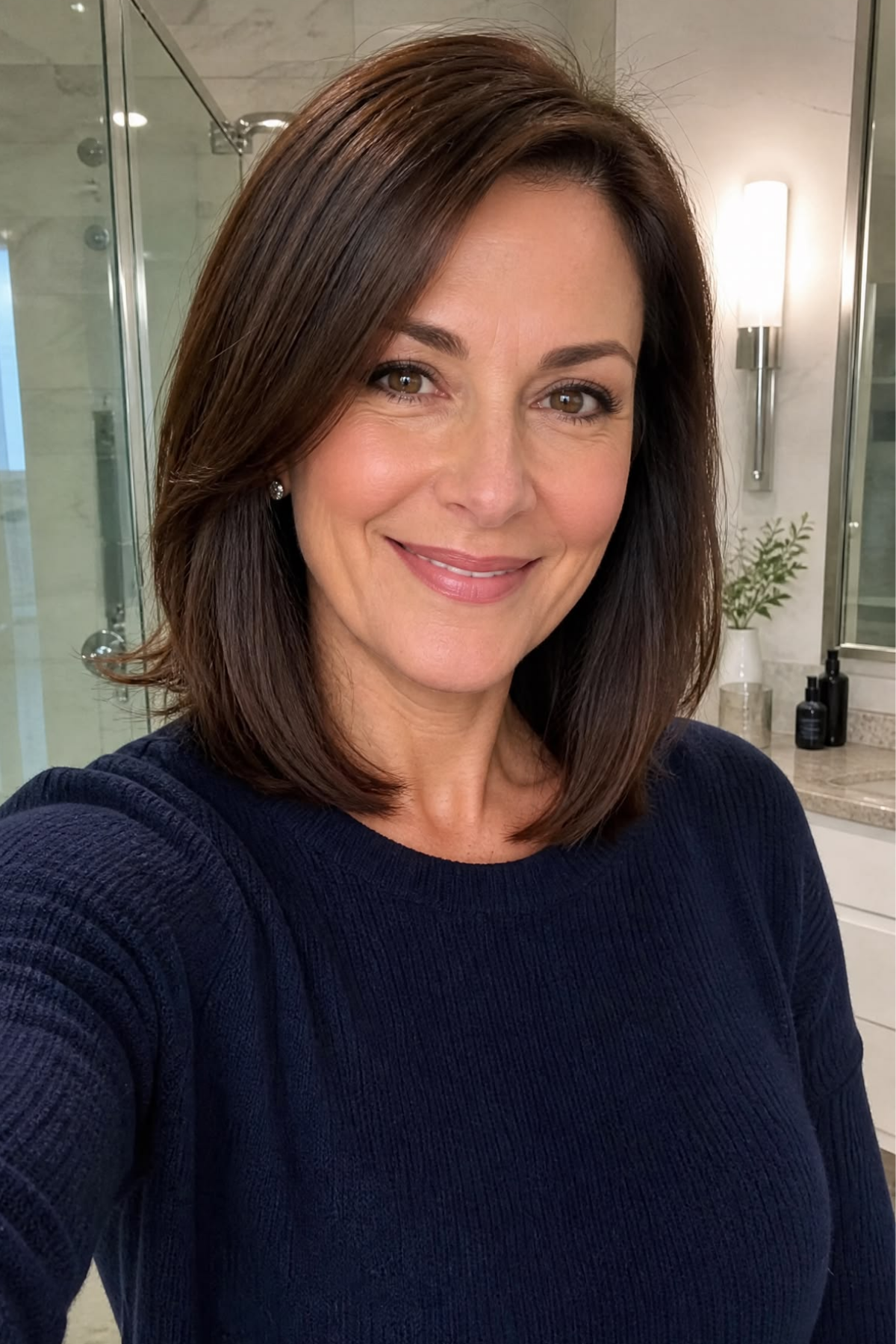
The Layered Mid-Length with a C-Curl Finish
This is a mid-length cut with enough layering that the ends can turn under into a soft C-shape. The top stays smooth, and all the body and bounce live in the ends. You need layers for the curve to work, even if it's just face-framing at the front.
Source: Pinterest
Best Suited For: Fine to medium hair, straight, in any color. It suits you if you like a bouncy, done blowout and you'll do it yourself most mornings. It works from just past the shoulder.
What to Ask Your Stylist:
Length: Just past the shoulder
Layers: Mid-length layers, with face-framing at the front
Finish: Soft
Bangs (optional): Long curtain pieces that blend into the face-framing
Pro Tip
For a soft C-shaped bend at the ends, apply amika The Shield Anti-Humidity Spray to damp hair and blow-dry the top smooth. Wrap the ends around the Olivia Garden Ceramic + Ion Speed XL 2 1/8" Round Brush, turn the brush under while directing the dryer down the hair, then hold for a few seconds before releasing. That small curve at the ends creates the C shape.
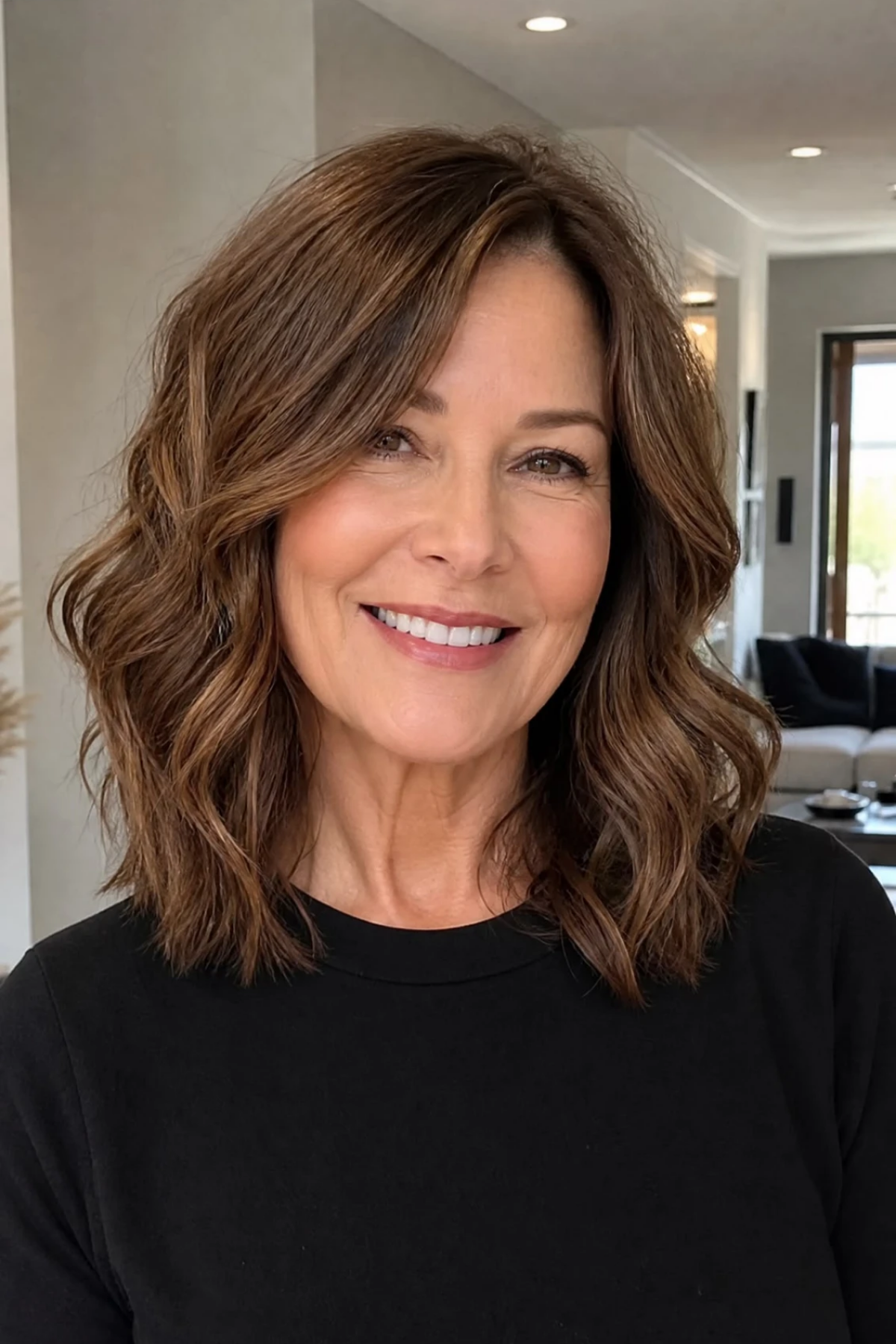
The Collarbone Cut with Internal Layers
The collarbone cut has one visible length at the collarbone, with weight taken out from underneath. Those hidden layers let thick hair lie flatter. You see a clean shape and none of the layering.
Source: Pinterest
Best Suited For: Thick, wavy or coarse hair in any color that still feels heavy and puffs out, when you don't want visible layers. A little internal layering is often enough to take that weight out so your waves lie nicely. Book regular trims so the weight doesn't build back up.
What to Ask Your Stylist:
Length: At the collarbone
Layers: Internal only, with weight removed from the inside
Finish: A clean edge
Bangs (optional): None
Pro Tip
For a smooth finish, apply amika The Shield Anti-Humidity Spray through damp hair from the mid-lengths to the ends, then comb it through once to distribute it evenly. Blow-dry on medium heat with the nozzle pointing down the hair from roots to ends, and keep going until your hair is completely dry to help it stay smooth instead of puffing out.
Not sure which haircut will flatter your face shape?
Enter your email below and I’ll send you my free haircut guide.
No spam, just great hair advice!
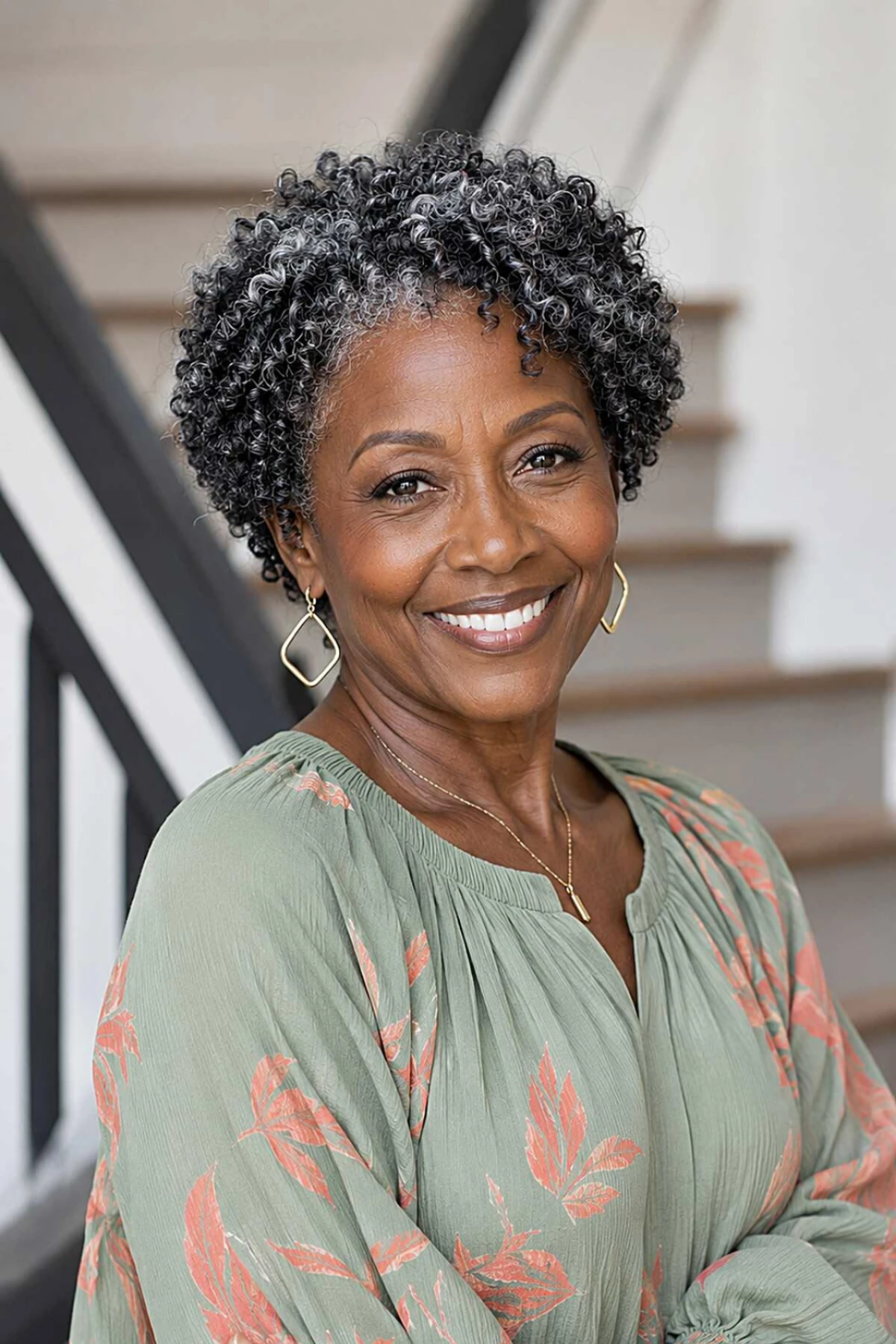
The Layered Curly Cut, Shorter at the Back
This cut puts layers through curly or coily hair and keeps it a little shorter at the back. That gives the curls more push and shape, and it takes out the bulk that sits at the bottom and turns into a triangle. Andie MacDowell has made natural silver curls in a layered shape her signature.
Source: Pinterest
Best Suited For: Thick curly or coily hair worn natural, in any color, when your curls go into a triangle and you're done blow-drying them straight. Curly hair shrinks a lot as it dries, so make sure your stylist leaves extra length. Plan on reshaping trims to keep the back shorter than the rest.
What to Ask Your Stylist:
Length: Two to three inches longer than you want it once it's dry
Layers: Through the whole shape, shorter at the back
Finish: Cut to your curl
Bangs (optional): A curly fringe, if you'll style it
Back / nape: Shorter at the back to give the curls push
Pro Tip
While your curls are still damp, work 1 to 2 pumps of Redken Acidic Bonding Concentrate Leave-In Treatment through the mid-lengths and ends. Leave it in, then keep your hands off your curls until they’re completely dry to avoid disturbing the curl pattern.
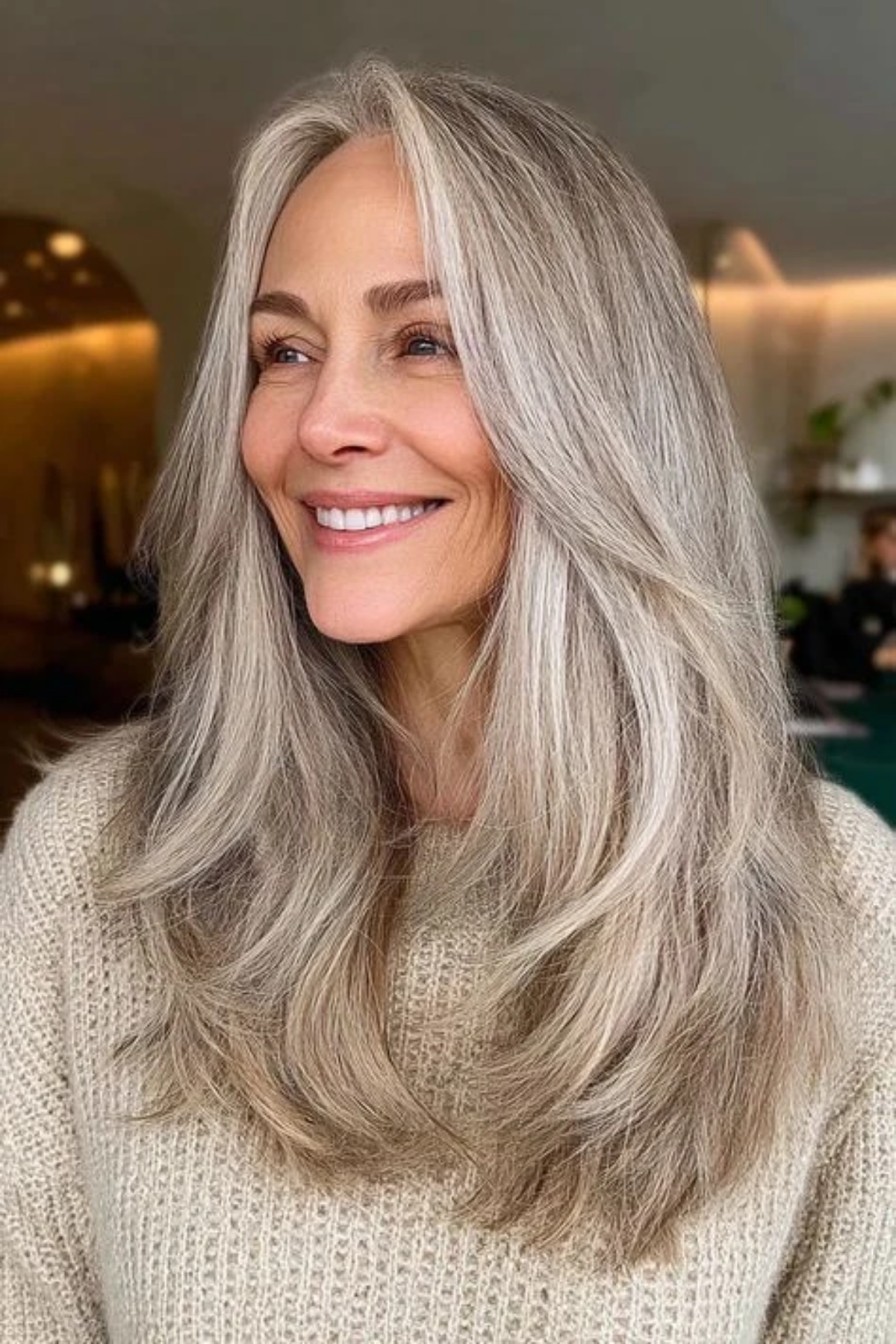
Long Layers That Keep Your Length
This cut keeps your length and adds layers through it for body and movement. It's the easiest way to keep long hair after 50, because it still has shape on the days you don't style it. You can also throw it up in a ponytail or a bun.
Source: Pinterest
Best Suited For: Medium to thick hair, straight or wavy, with healthy ends, in any color. This one is for you if you're keeping your length on purpose, whatever anyone's told you. It's one of the lowest-upkeep cuts in this list.
What to Ask Your Stylist:
Length: Keep it, with just the ends taken off
Layers: Long layers
Finish: Soft
Bangs (optional): None
Pro Tip
For a bouncy blowout, apply amika The Shield Anti-Humidity Spray through damp hair, then work in sections with the Olivia Garden Ceramic + Ion Speed XL 2 1/8" Round Brush. Roll the ends away from your face as you blow-dry, keeping the dryer pointed down the hair. The outward bend gives long layers more movement and helps show off their shape.
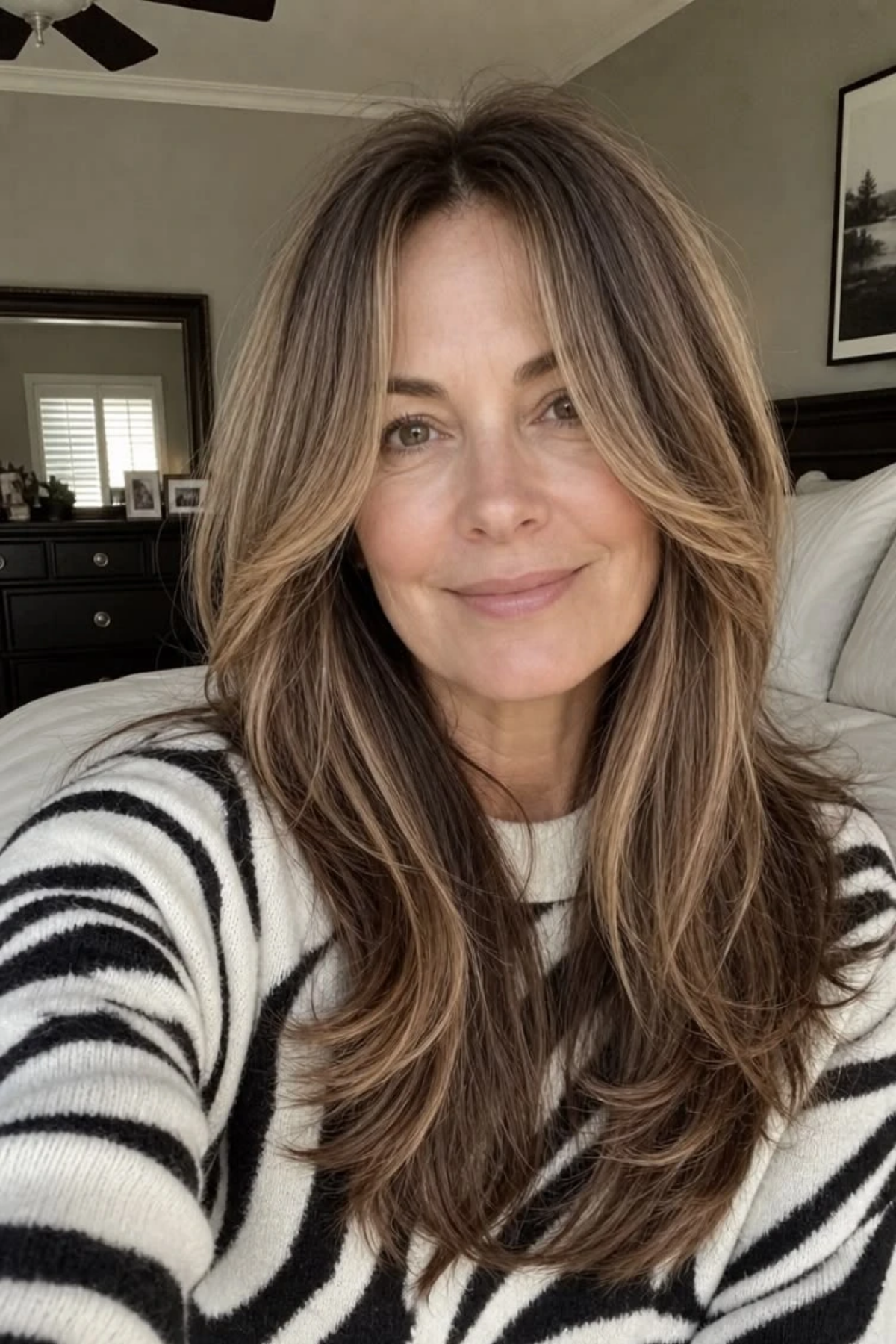
Long Layers with Curtain Bangs
This is long layers with a curtain bang blended into the face-framing at the front. It's the combination almost everyone is asking for right now. The bangs part in the middle and sweep out toward your cheekbones. It's the same face-framing fringe Brigitte Bardot made famous.
Source: Pinterest
Best Suited For: Any texture from fine to thick that can take a fringe, in any color. It suits you if you want bangs but not high-maintenance ones. A curtain bang that sits at the cheekbone and feathers back blends in as it grows, so it doesn't need constant attention.
What to Ask Your Stylist:
Length: Long, with just the ends taken off
Layers: Long layers, with face-framing at the front
Finish: Soft
Bangs (optional): A curtain bang at the cheekbone, blended into the face-framing
Pro Tip
Always dry your bangs first, while they’re still damp. Mist amika The Shield Anti-Humidity Spray over the fringe, then use a round brush to roll each side back and away from your face as you blow-dry. Let your bangs cool in that position so they keep that soft, swept-back shape.
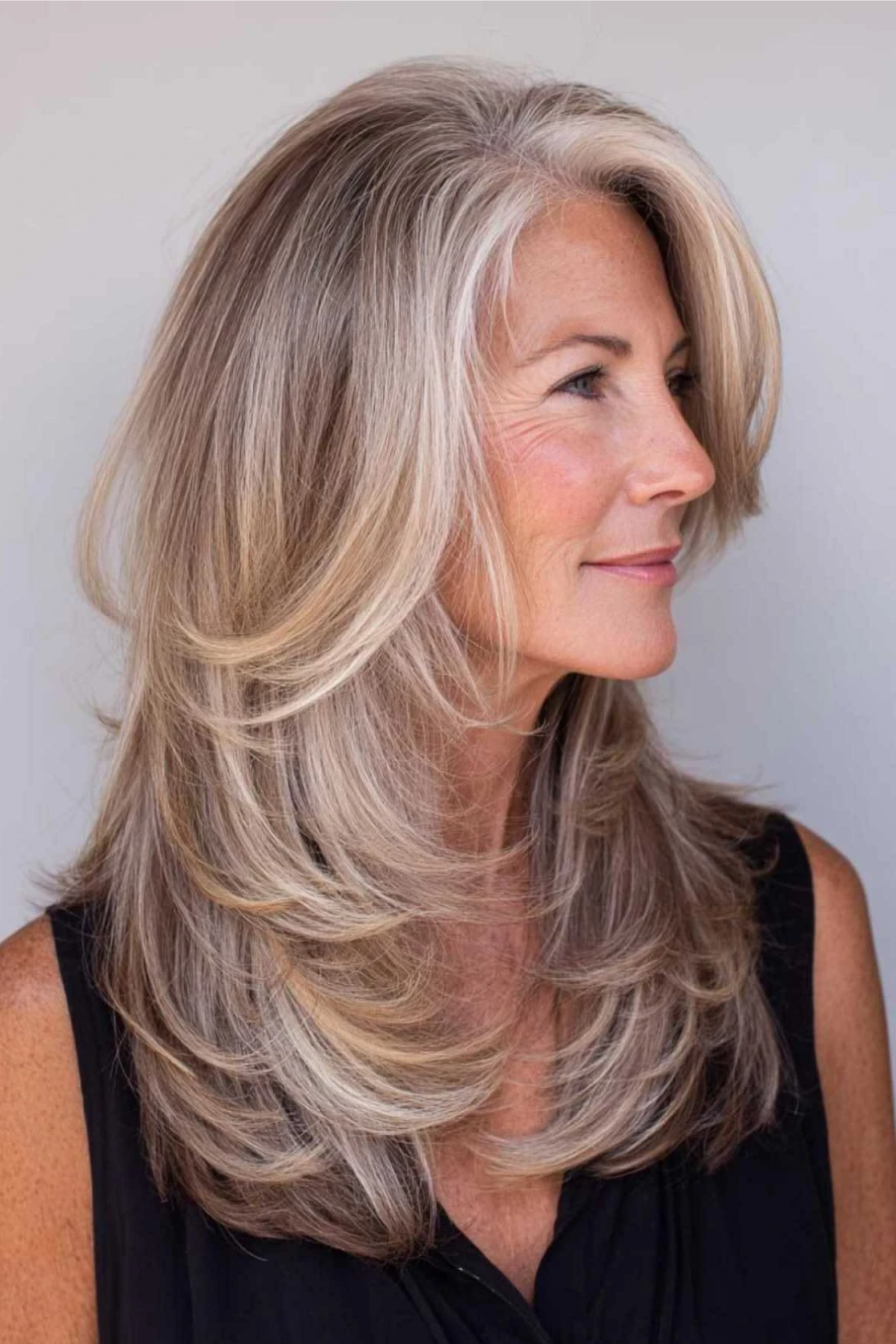
The Butterfly Cut
A butterfly cut has heavy layers, shorter at the front and the back, that frame your face while keeping your length. The ends get feathered back, which gives long hair volume and a lifted shape. The heavy layering and the way you style it are what make it a butterfly, and a middle part is what makes it stand out. It's a modern take on Farrah Fawcett's feathered 1970s layers.
Source: Pinterest
Best Suited For: Medium to thick hair in any color, ideally thick, when you want volume and a bit of drama. It's not a cut for fine hair, because that much layering makes fine hair look thinner, and the heavy layers need regular trims to keep their shape.
What to Ask Your Stylist:
Length: Long
Layers: Heavy layers, shorter at the front and the back
Finish: Feathered
Bangs (optional): Long face-framing pieces, worn with a middle part
Pro Tip
For that airy, flippy finish, apply amika The Shield Anti-Humidity Spray through damp hair, then rough-dry with the Shark FlexStyle Air Styling & Drying System. Switch to the brush attachment and flip the front and side sections away from your face, then turn a few pieces at the bottom inward. Mixing the two directions gives the layers that soft, bouncy movement.
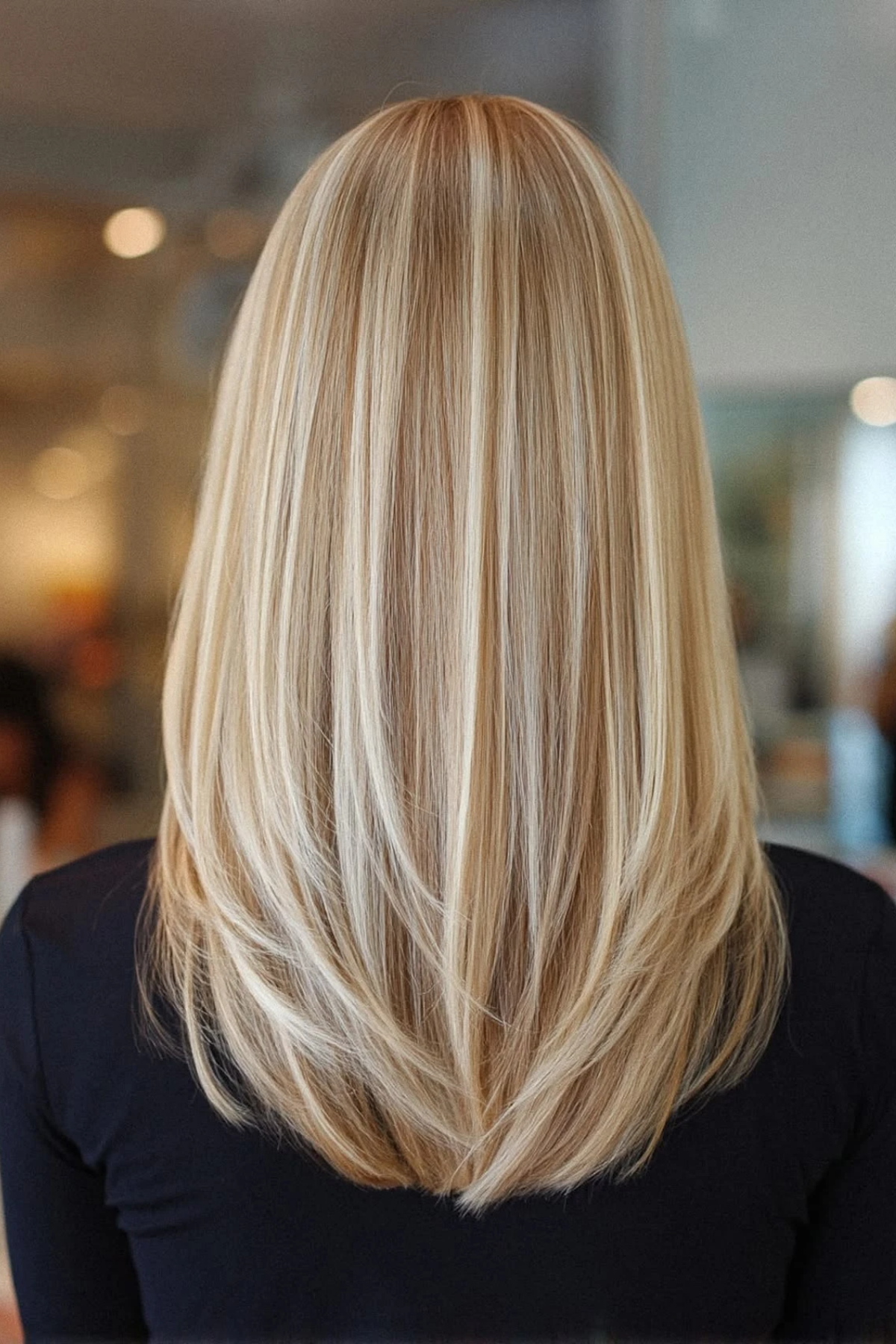
The U-Cut
A U-cut keeps your hair long with a rounded, U-shaped edge at the back. That curve keeps the ends looking full as it grows, whereas a V-shape can make them look thinner. If the rounded edge holds too much weight, your stylist can point cut or thin it out.
Source: Pinterest
Best Suited For: Thick, long hair, straight to wavy, in any color. It suits you if you want shape at the back without your ends looking thin. It grows out well, so you can stretch the time between trims.
What to Ask Your Stylist:
Length: Long
Layers: Long layers
Finish: A rounded U-shape at the back
Bangs (optional): None, or long face-framing pieces at the front
Back / nape: The U-shape is the whole back
Pro Tip
To show off the rounded shape of a U-cut, apply Color Wow Dream Coat Supernatural Spray through clean, damp hair and comb it straight down. Use the Shark FlexStyle Air Styling & Drying System concentrator to dry the back sections smooth, directing the air from roots to ends. Dry your hair completely so the spray activates and the U-shaped edge falls in one smooth curve across your back.
The Long Cut for Fine Hair (Blunt Back, Soft Front)
This long cut keeps the back with no layers, so the ends stay full, and only softly layers the front. On fine hair, less layering keeps the length looking like more hair. The front is often a little thinner than the back, so the layers there stay gentle.

Source: Pinterest
Best Suited For: Fine hair kept long, straight or slightly wavy, in any color. It suits you if you want to keep your length without the ends going thin and see-through. You'll need trims a little more often than you'd think, a small one every four to six months.
What to Ask Your Stylist:
Length: Long, with the ends trimmed
Layers: None through the back, soft at the front
Finish: Blunt at the back
Bangs (optional): None
Pro Tip
For more volume in fine hair, spray K18 AstroLift Reparative Volume Spray at the roots while your hair is damp, then flip your head upside down and blow-dry until the roots are almost dry. Flip back up and finish the ends smooth. Drying the roots away from your scalp gives fine hair more lift without teasing.
| Keep Reading Before Your Next Cut |
|---|
If you're still deciding, these are the posts I'd send you to next.
|
How to Choose Your Haircut After 50
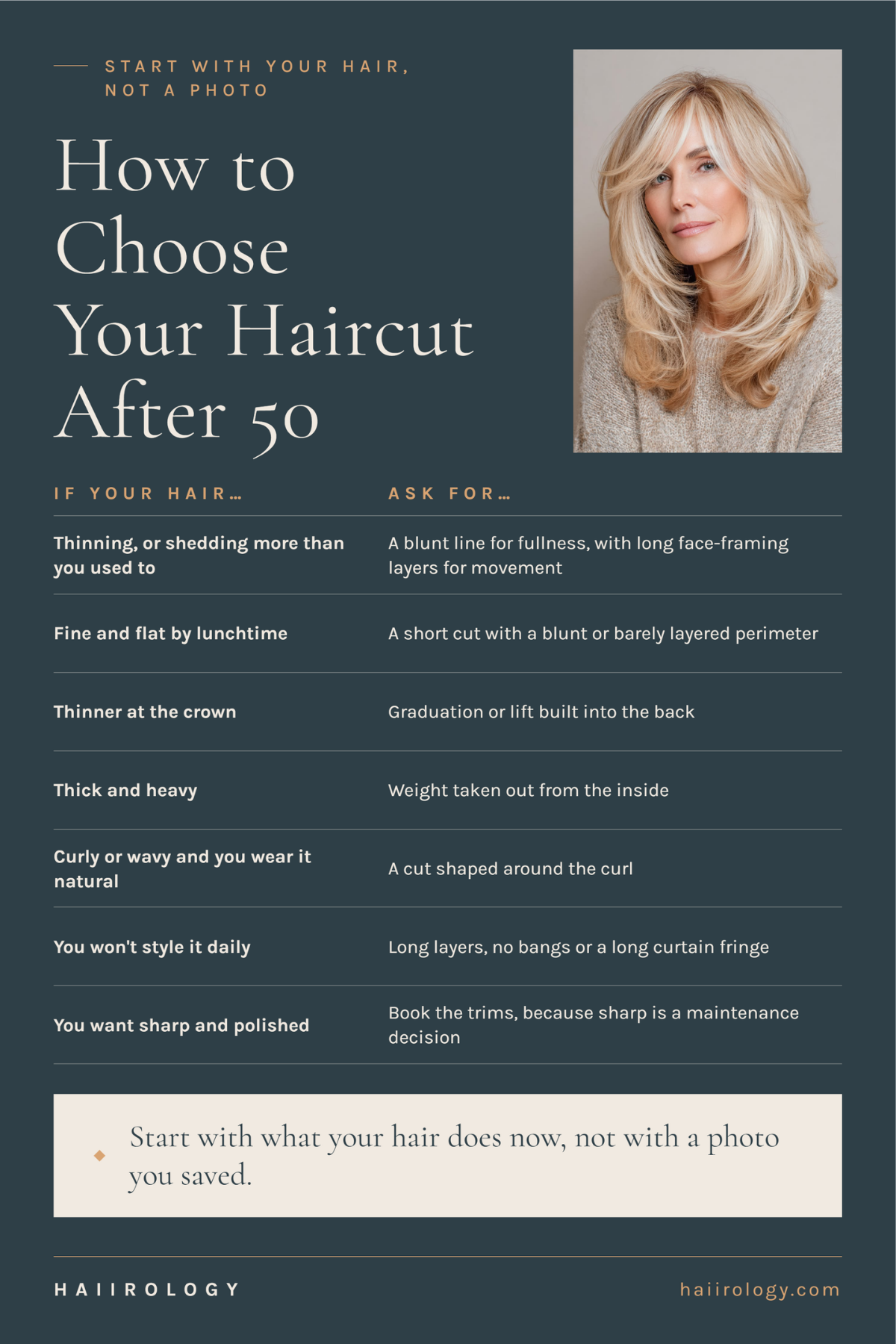
Before you choose a haircut, think about two things: what your hair is doing now and how much time you actually want to spend styling it.
A cut can look great when you leave the salon but feel completely wrong once you have to manage it yourself. Start with your hair texture, density, and daily routine, then use this to narrow down the 17 cuts above:
Thinning or shedding more than before: Keep more fullness through the ends and add longer face-framing pieces for movement. Try cuts 6, 9, and 17.
Fine and flat by lunchtime: Go for a shorter cut with a blunt or lightly layered edge. Try cuts 1, 3, and 6.
Thinner at the crown: Choose a shape that builds height through the crown, like cut 3, or a chin bob you can easily refresh at the roots, like cut 4.
Thick and heavy: Look for internal layers that remove some weight without making the ends look thin, or keep a fuller rounded edge. Try cuts 11 and 16.
Curly or wavy and worn natural: Choose a cut shaped around your natural curl pattern. Try cuts 7 and 12.
You don’t want to style it every day: Keep things simple with long layers and either no bangs or a longer curtain fringe. Try cuts 8 and 13.
You like a sharp, polished look: A clean one-length cut around the chin or jaw works well, but expect more frequent trims to keep that line crisp. Try cuts 5 and 6.
How Often to Trim, and Keep Your Cut Fresh
With haircuts for women over 50, how often you need a trim depends on the length. The shorter the cut, the sooner it loses its shape, so short cuts need the most frequent appointments. Long hair can go longer, but fine ends still need regular attention. Your wash routine matters too, especially if your hair is finer or greyer than it used to be.
Short cuts: Pixies, bixies and bobs lose their shape first, so book these more often than anything in this list.
Long fine hair: Small trims stop your ends from going see-through. Leave it too long, and there's more to cut off when you come back.
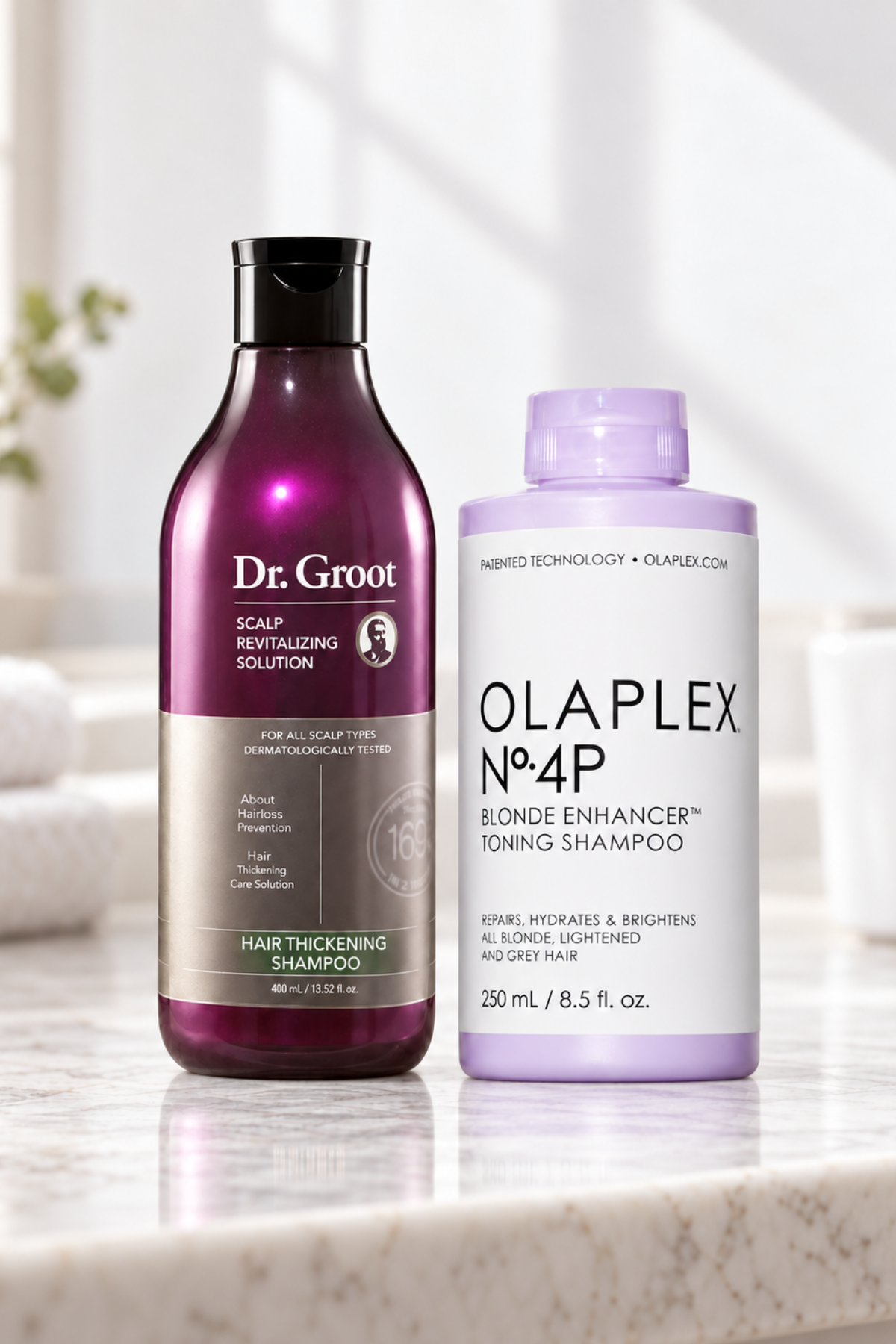
Wash for body: Volume starts in the shower. Use a shampoo and conditioner that won't weigh your roots down. I like Dr. Groot Scalp Revitalizing Solution Hair Thickening Shampoo for finer, flatter hair. Massage it into your scalp before you rinse, then put conditioner on your ends only.
Grey that turns yellow: Purple shampoo still works on grey hair. Olaplex No.4P Purple Toning Shampoo brightens it. Lather it in, leave it for 1 to 3 minutes so the purple can work, then rinse. You don't need to tone as often as a blonde does, though. Over-toning turns grey, purple, and too ashy, so use it now and then, not every wash.
Everything I Used in This Post
FAQs: Haircuts for Women Over 50
What is the most flattering hair length for women over 50?
The most flattering hair length depends on your hair texture and density. Fine hair often looks fuller at shorter lengths or with a blunt edge, while thick hair can carry longer styles well. At any length, softness around the face can make the cut more flattering.
What are the haircut trends for women over 50 right now?
Popular haircuts for women over 50 include mid-length and long layered cuts with face-framing pieces and curtain bangs. These styles keep the length while adding movement, volume, and softness around the face.
What is the most flattering haircut for an older woman?
A blunt cut with long face-framing layers is a flattering option for many women over 50. The blunt baseline helps the ends look fuller, while the face-framing layers add softness and movement without removing too much density.
What are some popular short haircuts for women over 50?
Popular short haircuts for women over 50 include pixies, bixies, stacked bobs, chin-length bobs, Italian bobs, blunt bobs, and short shags. The best option depends on your hair texture, density, face shape, and how much styling you want to do.
What is the best hairstyle for thin, fine hair over 50?
Thin, fine hair often looks fuller with a blunt cut and minimal layering. Pixies and blunt bobs work well at shorter lengths. For longer hair, keep the back mostly one length and add only soft face-framing layers to preserve fullness through the ends.
Does thin hair look better one length or layered?
Thin hair usually looks fuller with a one-length cut or minimal layering. Too many layers can remove density from the ends. If you want movement, keep the back fuller and add a few soft face-framing layers instead.
Final Word from Haiirology
The best haircuts for women over 50 aren't the shortest ones. They're the cuts built for the hair you have right now, with fullness kept at the bottom and softness where it frames your face.
Pick the two cuts from this list that match your texture and how much you'll style. Then take them to your stylist and tell them what you want the front to do.
If you want to know exactly where those front layers should fall for your face, grab my free Haircut Guide.
And come say hi on Instagram for more cuts like these.
Free Haircut Guide
Find Your Perfect Haircut for Your Face Shape
Take the guesswork out of your next haircut and find the styles that flatter your face shape before you sit in the salon chair.
- ✓ Identify your face shape
- ✓ Get personalized haircut ideas
- ✓ Learn what to ask your stylist for
No spam, just great hair advice!





Haircuts for women over 50 should still look good on day three, before you've touched them. Here are 17 by length and texture, plus what to ask for.